

Science provides powerful tools for understanding and manipulating nature. Science has enabled the splitting of atoms, the exploration of space, and the control of matter at previously unimaginable scales. At the same time, science operates within limits that are rarely stated explicitly.
There exists a boundary beyond which certainty no longer holds. This boundary is not a failure of science. It is a limit imposed by observation itself.
This framework states that factual claims must remain confined to what an observer can practically access, interact with, and control. Beyond that boundary, assertions lose factual authority and become provisional.
The Observer Comes First
All scientific claims depend on an observer.

An observer may be a human, a biological system, a scientific instrument, an artificial intelligence, or a combination of these. The defining feature of an observer is not consciousness alone, but capacity.
Observer capacity determines what can be detected, what can be interacted with, and what can be controlled and repeated. These capacities define the limits of legitimate factual assertion.
The Point of Emergence
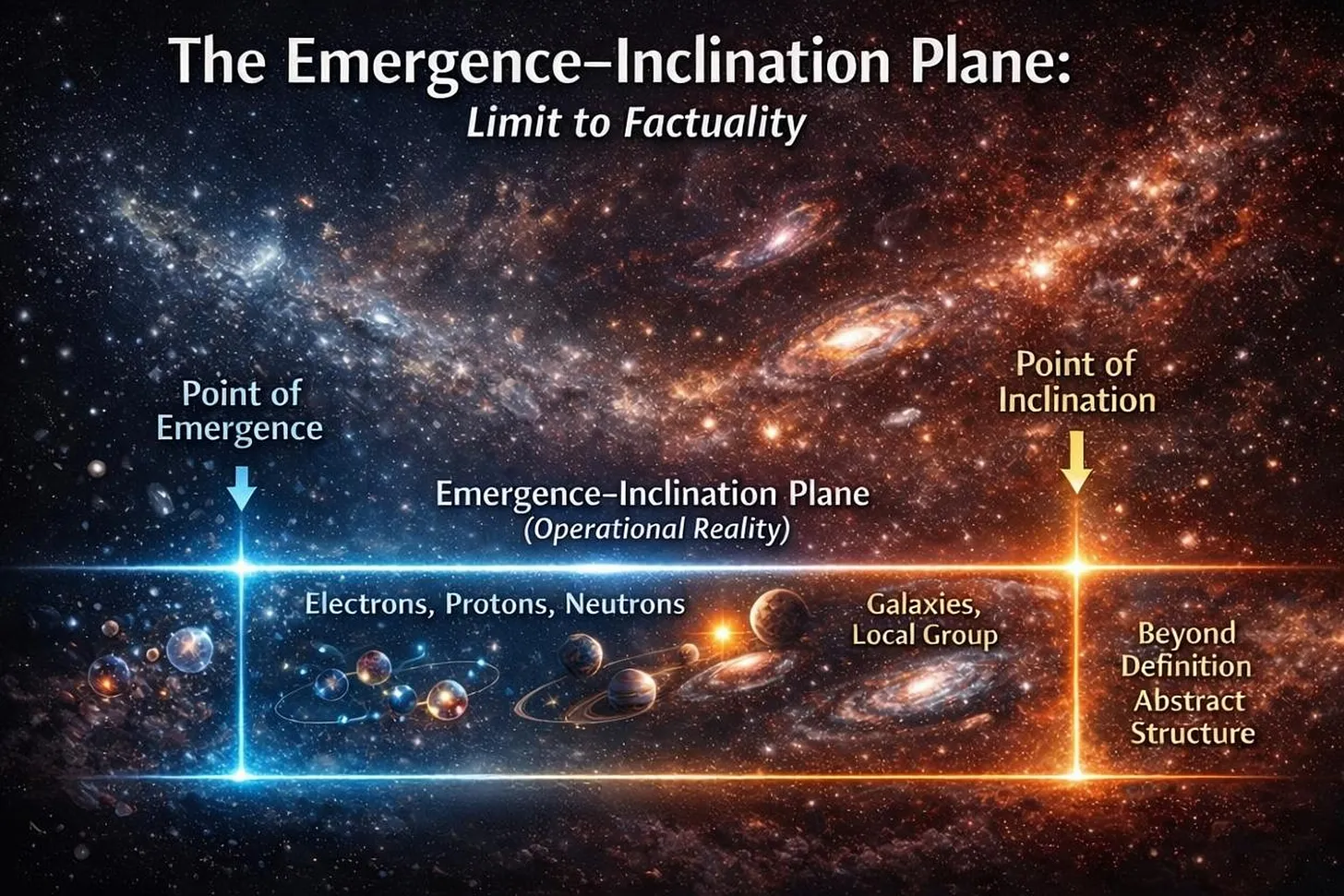
The Point of Emergence is defined as the smallest scale at which an observer can practically observe and interact with an entity.
Throughout history, this point has shifted. Atoms were once considered fundamental. Later, electrons took that role. Later still, smaller inferred entities were proposed.
Each shift occurred because observational and interaction capacity improved. Reality itself did not change. What changed was what could be accessed.
Below the Point of Emergence lies the substrate. The substrate is not empty, unreal, or meaningless. The substrate is simply that which cannot yet be practically accessed, interacted with, or controlled.

The Point of Inclination
There exists an upper boundary to meaningful definition.
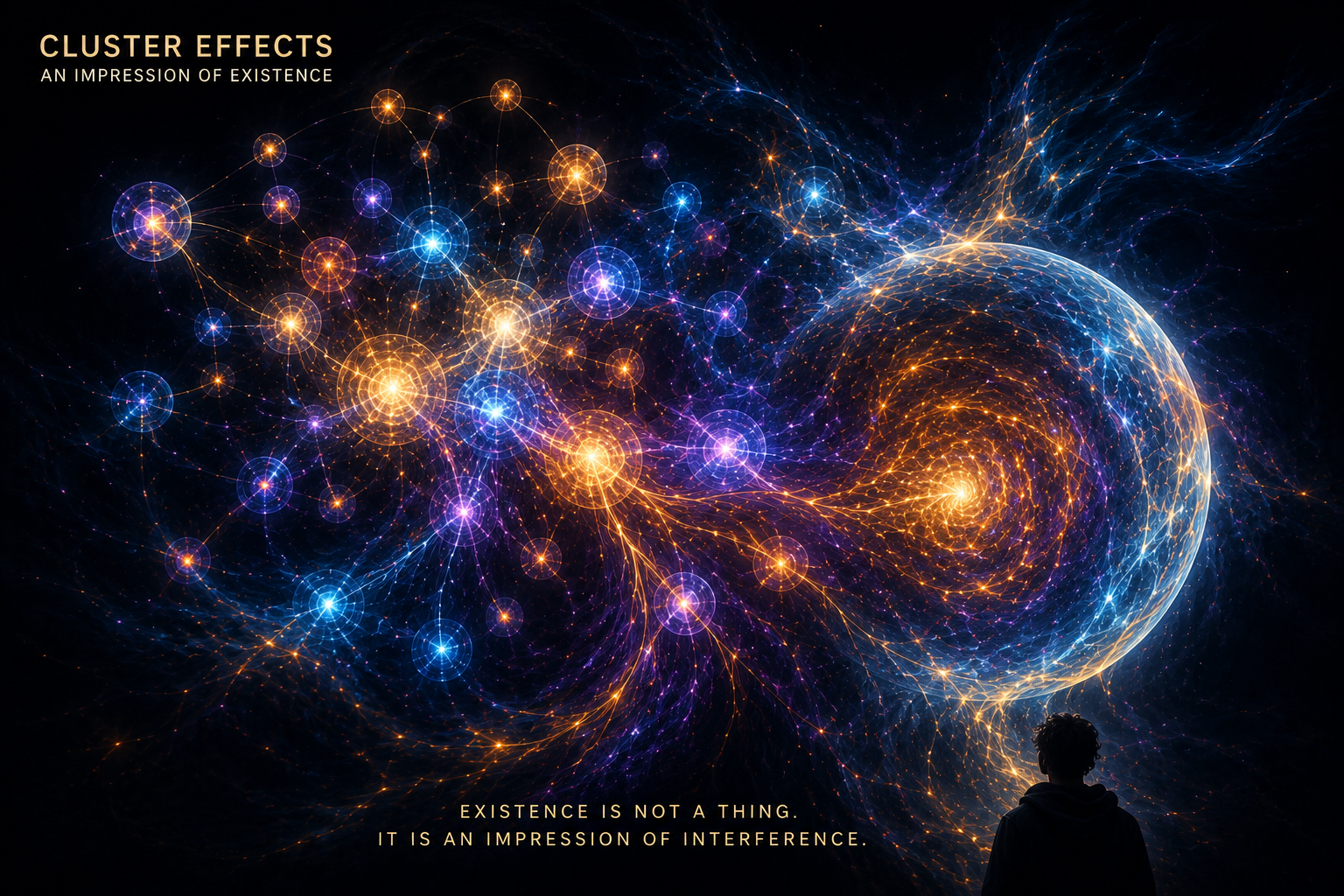
As systems increase in scale and complexity, a point is reached where they can no longer be clearly treated as a single, well-defined entity. For human observers, machines and planets remain clear. Entire universes exist mostly as theoretical constructions.
The Point of Inclination marks the largest scale at which an observer can still define an entity with practical coherence. Beyond this point, structure becomes diffuse and certainty declines.
The Emergence-Inclination Plane
The Emergence-Inclination Plane is the region between the Point of Emergence and the Point of Inclination.
Within this plane, entities can be observed, interactions can be repeated, states can be fixed, and technologies can be built with confidence. This plane defines the domain of operational science.
Outside this plane, models and theories may still exist, but they no longer carry the same factual authority. Assertion without interaction becomes speculation.
Emergence-Inclination Deviation
When an entity enters the Emergence-Inclination Plane, it does not appear fully defined.
Properties accumulate through interaction and combination. Complexity builds upward from the substrate. Electrons combine to form atoms. Atoms combine to form molecules. Molecules form compounds. Compounds form planets. Planets form solar systems. Solar systems form galaxies.
As accumulation increases, entities become easier to perceive, easier to define, and easier to treat as stable objects. The distance created by this accumulation from the substrate is termed Emergence-Inclination Deviation.

Deviation also operates in the opposite direction. As systems approach the Point of Inclination, structure begins to blur again. Clarity peaks between the smallest and largest extremes.
Electrolysis: Control Without Final Understanding
Electrolysis is the process of splitting water into hydrogen and oxygen using electricity.
Electrolysis is possible because electrons lie within the Emergence-Inclination Plane. Electrons can be detected, guided, controlled, and repeatedly manipulated.
Because of this control, electrolysis functions reliably. Technologies emerged. Industries formed. Authority over the process became factual.
This control does not imply full knowledge of the true nature of electrons. It establishes something more important: repeatable interaction makes an entity studyable and usable even when its deepest nature remains unknown.
Why the Substrate Matters
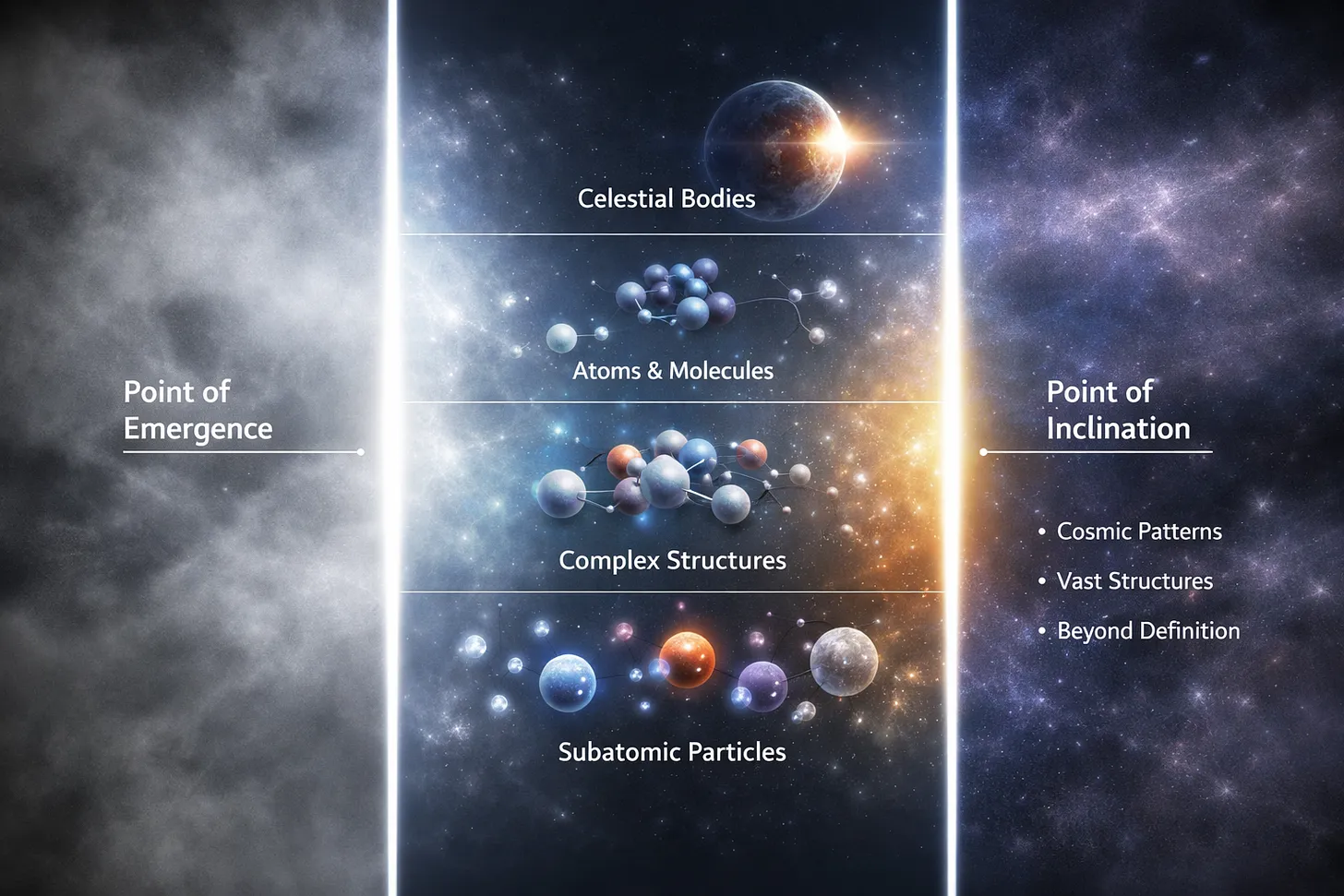
When an entity can no longer be practically observed or interacted with, it ceases to function as a defined entity. It transitions into the substrate.
Within the substrate, observation fails, interaction collapses, and control is no longer possible. What remains are mathematical models, inferred structures, and conceptual descriptions.
These tools are useful, but they are not equivalent to factual authority.
The reality science rarely states directly is this: we do not know what lies in the substrate, how it originated, or how it fundamentally operates.
Science avoids this domain not because it is empty, but because it is operationally silent.
A Note on Quantum Ideas
Some quantum phenomena, such as entanglement, exist partially within the Emergence-Inclination Plane. They can be measured, repeated, and applied in technology.
However, their interpretation remains uncertain. Competing explanations persist, and no single interpretation can be fixed with full authority.
Application does not guarantee complete understanding. Usability does not equal final explanation.
The Real Risk
Uncertainty is not the danger. The danger lies in treating models beyond observation as settled facts.
When authority, consensus, or media repetition replaces interaction and control, science drifts into overconfidence. Questioning limits becomes discouraged.
For future endeavors such as deep-space travel and human starships, false certainty poses greater risk than acknowledged ignorance.
Final Thought
Reality does not disappear beyond observation.
Factual authority does.

Science remains strongest when it recognizes the limits of its reach and allows future observers to expand those limits responsibly.
That restraint may be the most important tool humanity carries into the unknown.