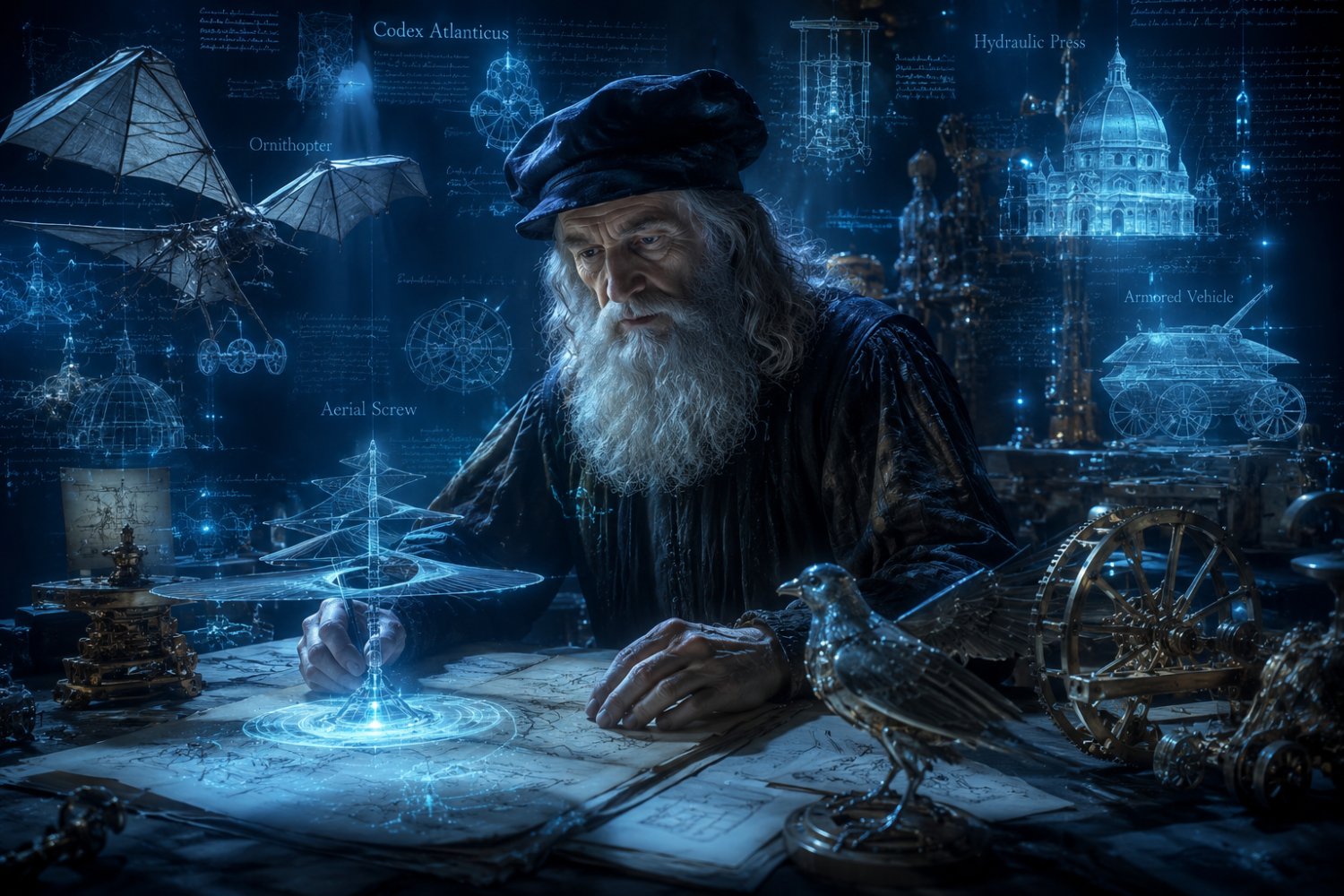
An Extreme Expression of Integrated Human Intellectual Potential
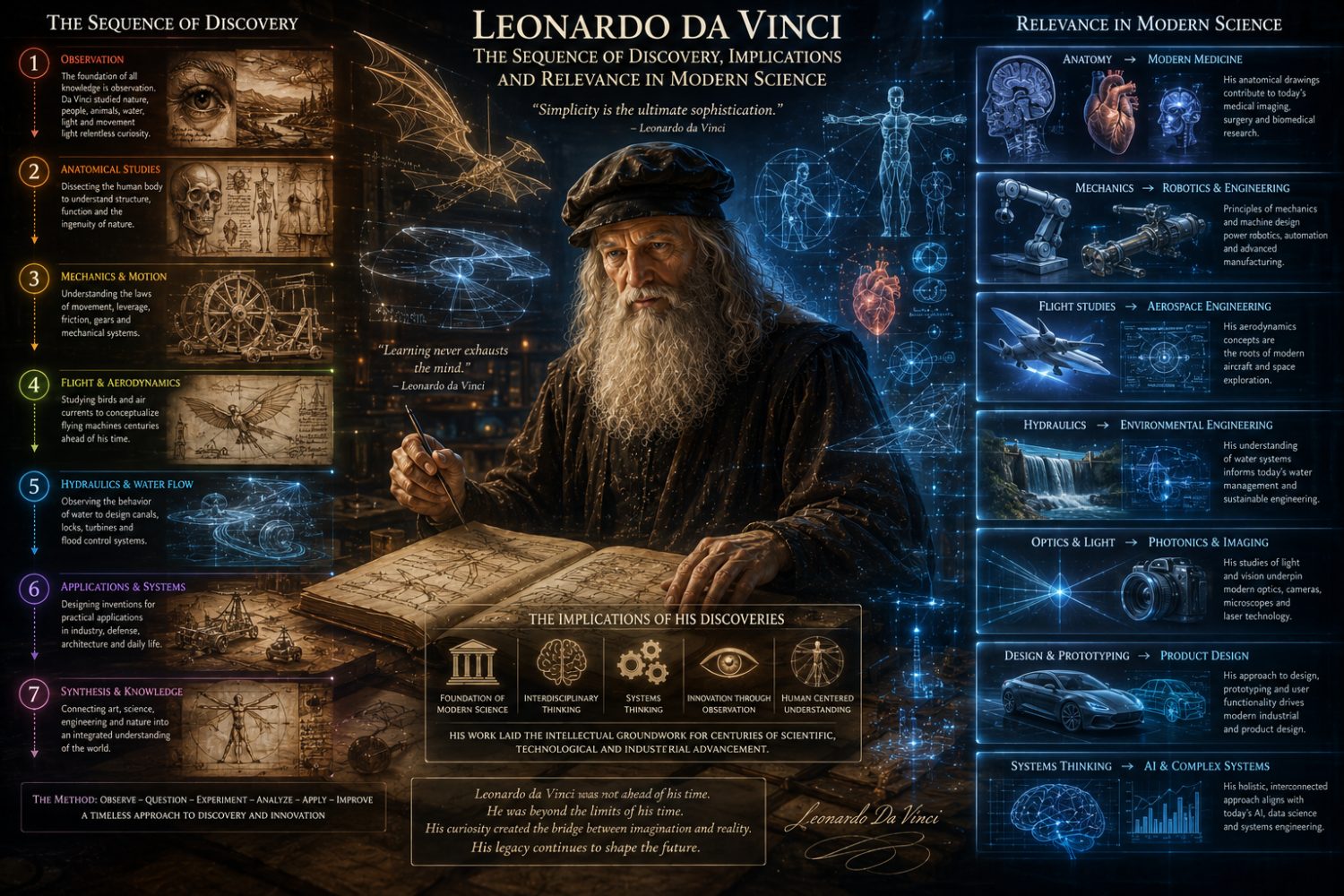
Some individuals achieve success within the limits of their era.
Others permanently expand the boundaries of what humanity believes is possible.
Leonardo da Vinci belongs to the second category.
He was not merely a painter, inventor, scientist, or engineer.
He represented something far greater: a model of integrated human capability where curiosity, discipline, creativity, observation, logic, imagination, and responsibility toward civilization operated together as a unified intellectual system.
Centuries before modern technology transformed the world, Leonardo pursued understanding across nearly every visible domain of human existence:
- anatomy,
- engineering,
- architecture,
- mathematics,
- mechanics,
- painting,
- hydraulics,
- military systems,
- flight,
- philosophy,
- geometry,
- and natural observation.
What made him extraordinary was not simply intelligence.
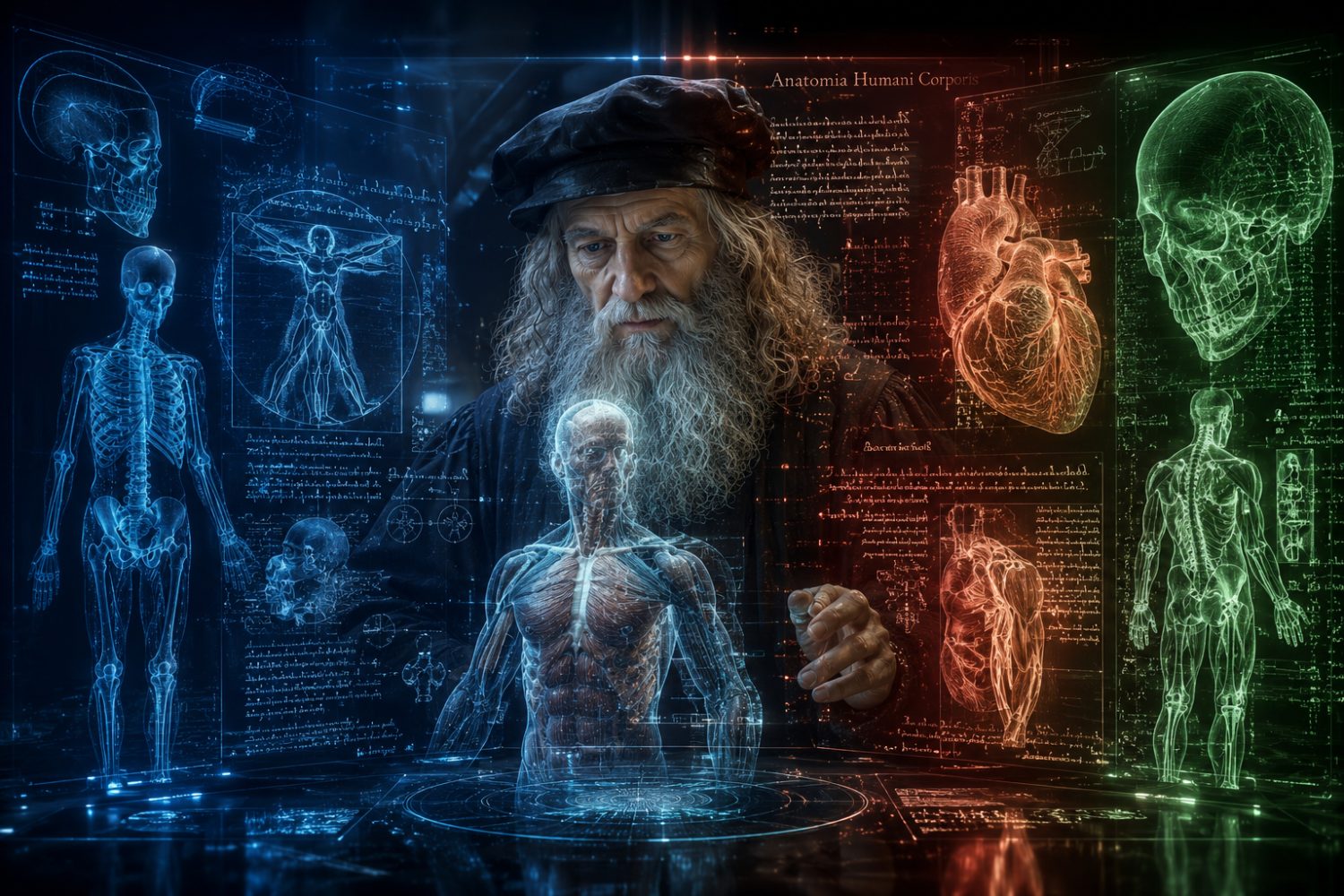
It was his refusal to accept artificial boundaries between forms of knowledge.
Modern civilization often trains individuals into narrow specialization. People are encouraged to master isolated systems while remaining disconnected from the larger structure of reality itself.
Leonardo demonstrated the opposite principle:
that deeper understanding emerges when knowledge becomes connected rather than fragmented.
To him:
- art was scientific observation,
- science was disciplined curiosity,
- engineering was applied imagination,
- and nature itself was the greatest teacher.
This integrated way of thinking remains one of the most powerful intellectual examples in human history.
The Discipline of Observation
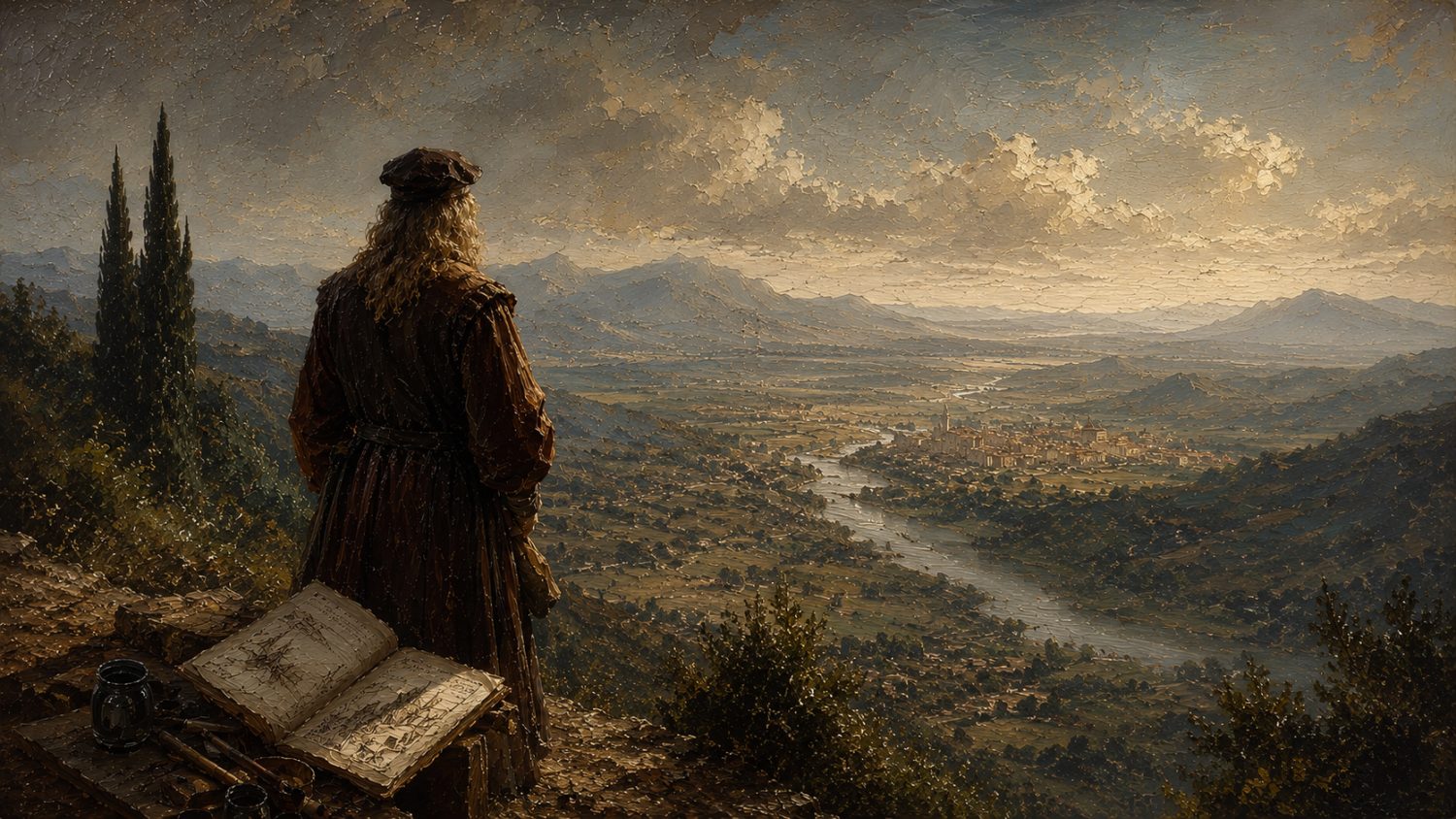
Leonardo did not rely primarily on inherited assumptions or accepted authority.
He studied reality directly.
He dissected human bodies to understand anatomy. He studied water currents to understand motion. He examined birds to understand flight. He analyzed light, geometry, mechanics, and proportion through relentless observation.
His notebooks reveal an individual obsessed not merely with appearances, but with underlying mechanisms.
He wanted to understand how things truly worked.
This remains one of his greatest lessons as a mentor:
civilization advances when human beings learn to observe deeply instead of merely repeating accepted ideas.
True understanding requires:
- patience,
- attention,
- independent thinking,
- disciplined curiosity,
- and intellectual honesty.
In many societies, people inherit conclusions without investigating foundations.
Leonardo represented the opposite mentality.
He believed knowledge should emerge from direct engagement with reality itself.
That mindset remains essential for science, leadership, innovation, engineering, philosophy, and civilization-building.
Knowledge Beyond Immediate Reward
Many historical figures pursued power, wealth, or status as their primary objective.
Leonardo’s work often appeared driven by something larger: the expansion of human possibility itself.
Many of his concepts would not become practical until centuries later.
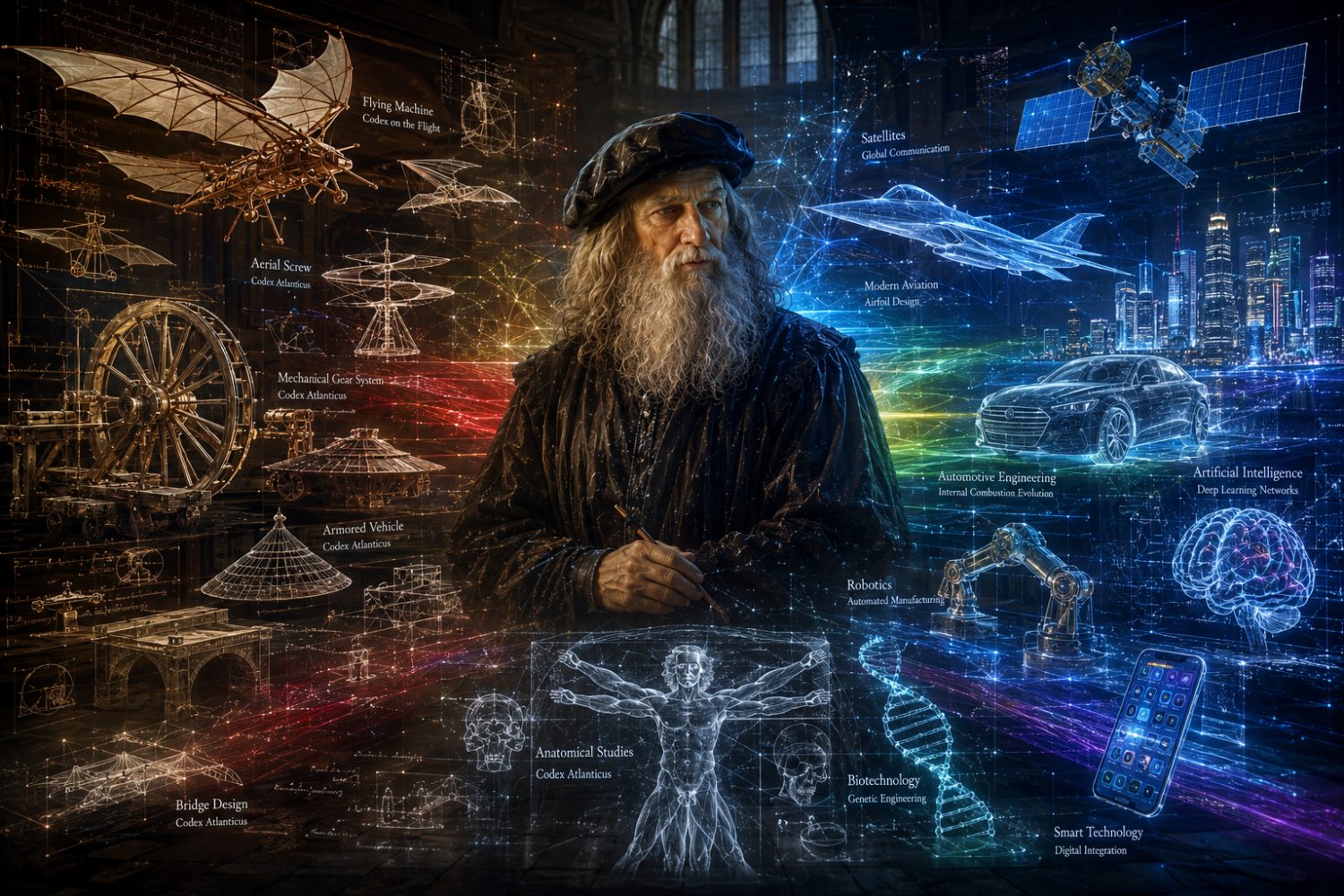
His sketches anticipated ideas connected to:
- aviation,
- armored vehicles,
- advanced mechanics,
- hydraulics,
- and engineering systems far beyond the technological capacity of his time.
Yet he continued to study, sketch, experiment, and imagine.
This reveals another profound principle:
valuable work is not always immediately rewarded by the world that first encounters it.
Some contributions are investments into the future.
Some ideas are seeds planted for generations yet unborn.
Leonardo’s life demonstrates that genuine intellectual labor should not depend entirely on immediate recognition, applause, or commercial success.
Civilization itself often advances because individuals continue meaningful work even when their era lacks the ability to fully understand it.
The Unity of Creativity and Logic
Modern systems frequently separate creativity from analytical thinking.
Leonardo united both.

His paintings required mathematical precision. His engineering required imagination. His anatomical studies required artistic accuracy. His inventions required philosophical vision.
He proved that creativity and logic are not enemies.
They are complementary forces.
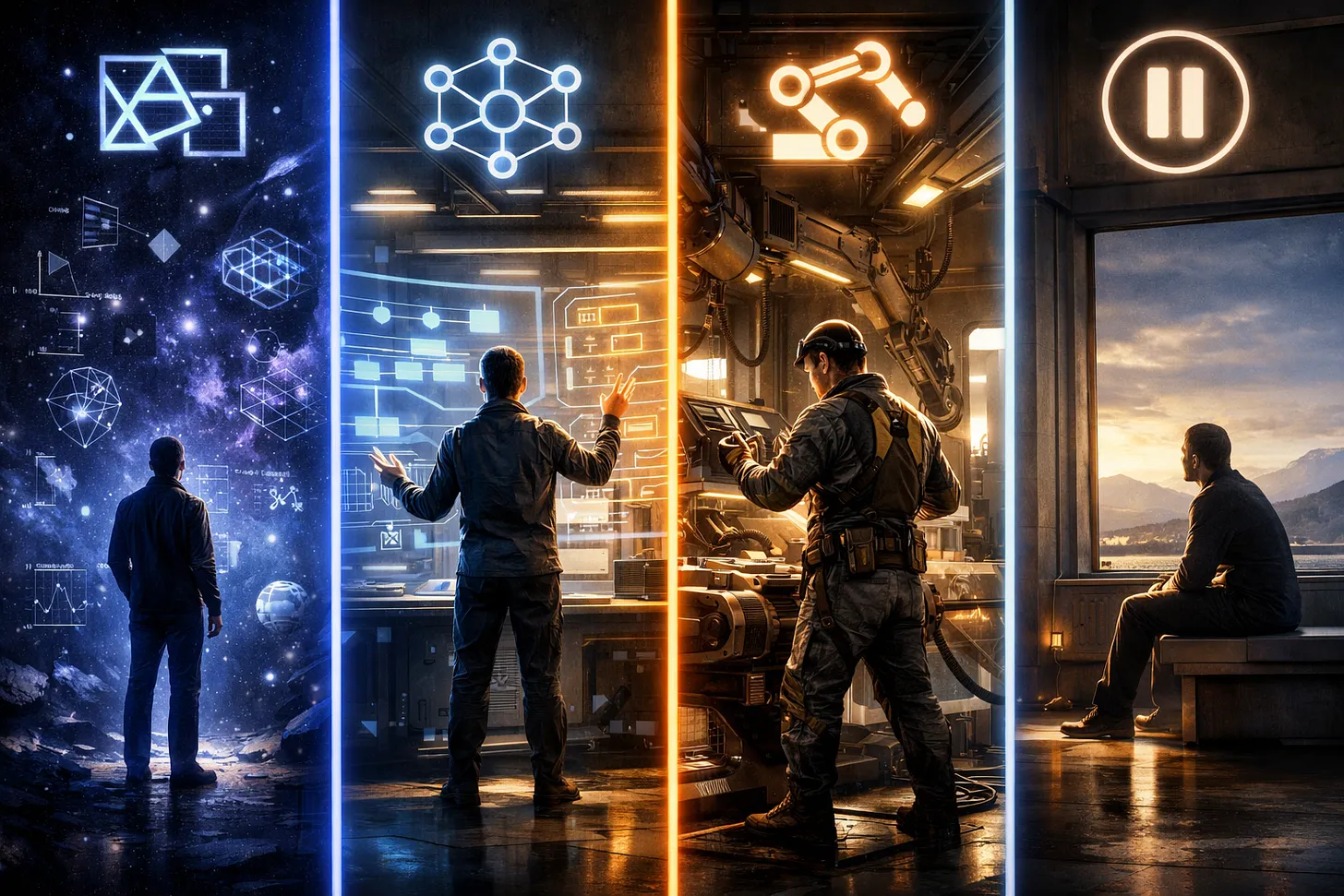
Human progress does not emerge from logic alone. Nor from imagination alone.
It emerges when disciplined reasoning and creative vision operate together.
This is one reason Leonardo remains timeless.
He demonstrated that the highest levels of human capability emerge when different forms of intelligence reinforce each other instead of competing against one another.

The separation between “technical minds” and “creative minds” is often artificial.
Leonardo embodied the possibility of intellectual integration.
Curiosity Without Intellectual Limitation
One of Leonardo’s defining characteristics was relentless curiosity.
He approached existence itself as something worthy of investigation.
No phenomenon appeared too small for study. No discipline appeared beneath consideration.
He studied:
- facial expressions,
- flowing water,
- cloud formation,
- muscle movement,
- architecture,
- machines,
- geometry,
- animals,
- warfare,
- and natural patterns.
This mindset reveals something important about civilization:
human advancement declines when curiosity becomes restricted by rigid systems of thought.
Leonardo refused intellectual confinement.
He pursued understanding wherever reality appeared to lead.
This ability to move across disciplines allowed him to see connections invisible to narrowly specialized thinking.
Many of history’s greatest breakthroughs emerged not from isolated expertise alone, but from the ability to connect ideas across different domains.
Leonardo remains one of the greatest examples of this principle ever recorded.
The Responsibility of Human Potential
Leonardo da Vinci represents more than talent.
He represents unrealized human capacity.
His life raises an uncomfortable question for every civilization:
How much potential is lost when curiosity is suppressed, education becomes mechanical, imagination is discouraged, or intelligence is reduced purely to economic survival?
Many educational systems produce memorization without understanding. Many institutions reward conformity more than insight. Many societies separate knowledge from responsibility.

Leonardo’s life challenges those limitations.
He reminds humanity that intelligence should not exist merely for personal advancement or material accumulation.
Knowledge carries civilizational responsibility.
The purpose of learning is not only individual success, but the expansion of human capability, understanding, resilience, and continuity.
A civilization that suppresses curiosity eventually suppresses innovation. A civilization that disconnects creativity from responsibility eventually weakens its own future.
Leonardo’s legacy therefore extends beyond art or science.
It becomes a warning against the underdevelopment of human potential itself.
Long-Term Thinking and Civilization
Leonardo often worked on ideas that exceeded the practical limitations of his era.
This required long-term thinking.
He understood that knowledge creation is cumulative. Progress in one century may become transformative in another.
Modern civilization frequently becomes trapped within short-term incentives:
- immediate profit,
- rapid consumption,
- instant recognition,
- political cycles,
- and temporary public attention.
Leonardo represents a different mentality.
A civilization survives not merely through short-term efficiency, but through long-term intellectual investment.
Some of the most important work humanity performs may not produce immediate results.
Yet future generations may depend upon it.
This principle applies not only to science, but also to education, ethics, governance, infrastructure, technological development, and cultural continuity.
Enduring Relevance
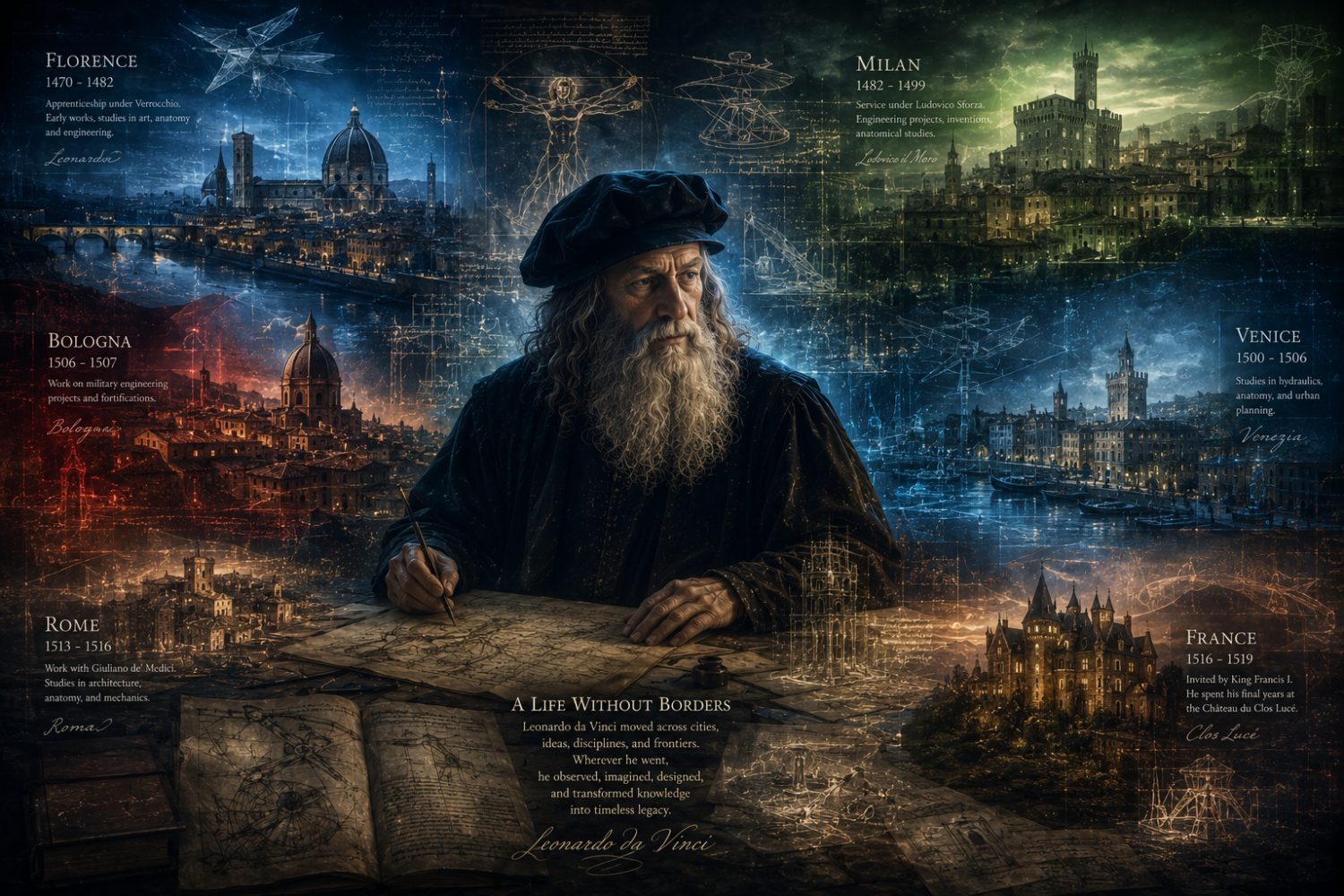
Centuries after his death, Leonardo da Vinci remains profoundly relevant because the challenges of civilization still require the qualities he embodied:
- interdisciplinary thinking,
- disciplined observation,
- technological imagination,
- artistic sensitivity,
- scientific curiosity,
- independent reasoning,
- long-term thinking,
- and intellectual integration.
He stands as a mentor not only to artists or scientists, but to all individuals seeking to understand how human beings can think more deeply, create more responsibly, and contribute more meaningfully to the advancement of civilization.
His life demonstrates that the human mind reaches its highest potential when curiosity is disciplined, imagination is constructive, knowledge is connected, and learning is directed toward something larger than personal reward alone.
Leonardo da Vinci therefore endures not merely as a historical figure, but as a continuing model of what integrated human potential can become.