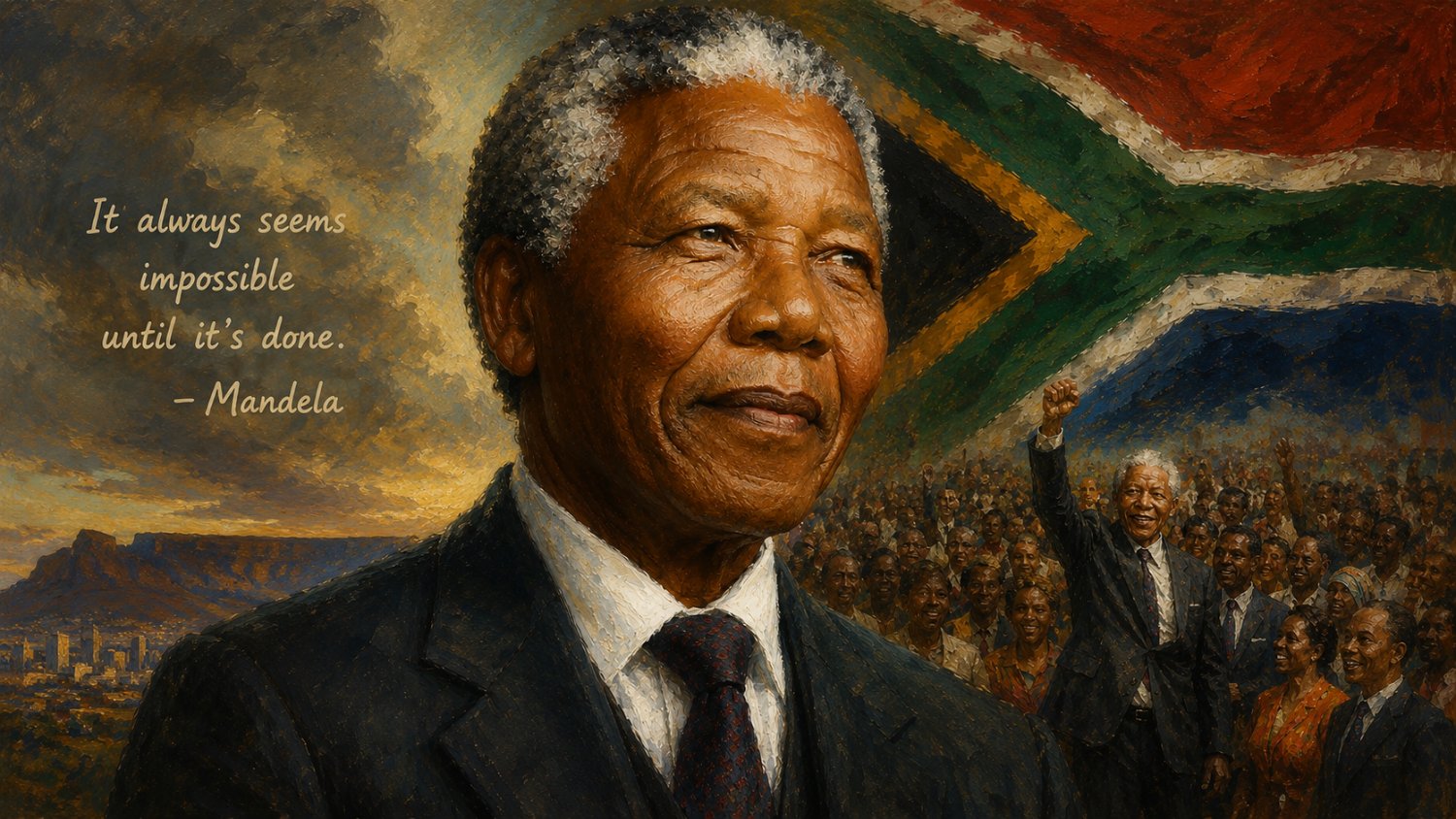
Leadership, Sacrifice, Peace, and the Responsible Use of Power
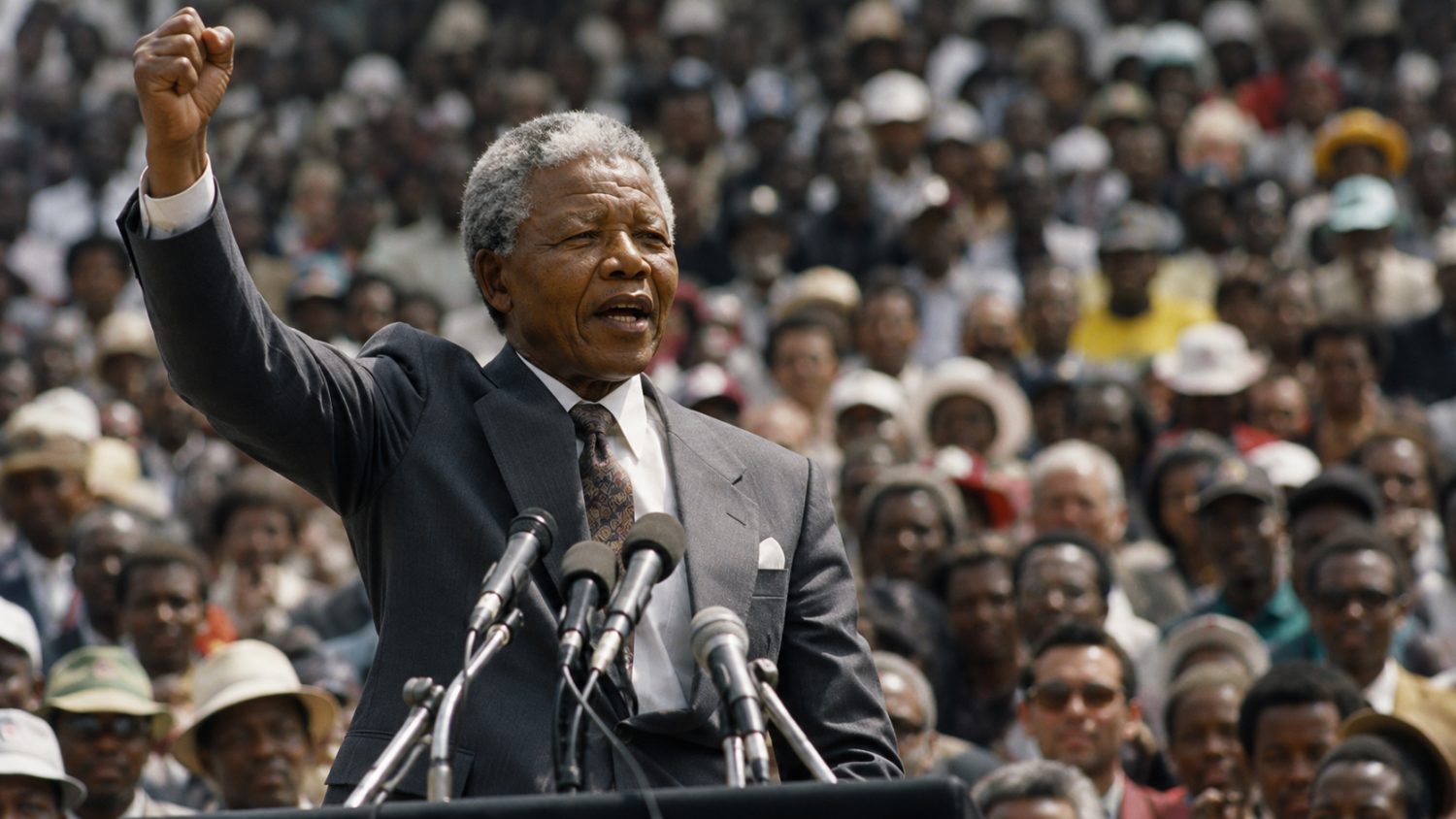
Nelson Mandela is one of the most respected political and moral leaders in modern history. Across Africa and the world, he became a symbol of freedom, endurance, reconciliation, and responsible leadership. What made Mandela extraordinary was not only his struggle against oppression, but the way he handled victory after gaining influence and power. Unlike many leaders who become consumed by authority, Mandela demonstrated restraint, humility, forgiveness, and a commitment to peace even after suffering greatly.
His life remains a powerful lesson on leadership, justice, self-control, and the importance of placing national unity above personal ambition.
Early Life and Background
Nelson Mandela was born on July 18, 1918, in the village of Mvezo in the Eastern Cape of South Africa. His birth name was Rolihlahla Mandela, a Xhosa name often translated as troublemaker. He came from the Thembu royal family, which gave him early exposure to leadership traditions and African governance systems.
As a young man, Mandela studied law and became increasingly aware of the racial injustices in South Africa. During this period, the country was dominated by white minority rule, and Black South Africans faced severe discrimination, restrictions, and oppression.
This system later became officially known as apartheid.
The Apartheid System
Apartheid was a political and social system that enforced racial segregation. Under apartheid, Black South Africans were denied many basic human rights. They could not vote freely, had restricted movement, limited access to quality education and healthcare, and were often forced into poor living conditions.
The government separated races by law and used police power to maintain control.
Mandela believed this system was deeply unjust and harmful not only to Black South Africans but to the moral future of the entire nation. He joined the African National Congress (ANC), an organization dedicated to fighting racial oppression and seeking equality.
At first, Mandela supported peaceful protest and civil resistance. However, as government violence increased and peaceful demonstrations were often crushed brutally, tensions in the country escalated.
Imprisonment and Sacrifice
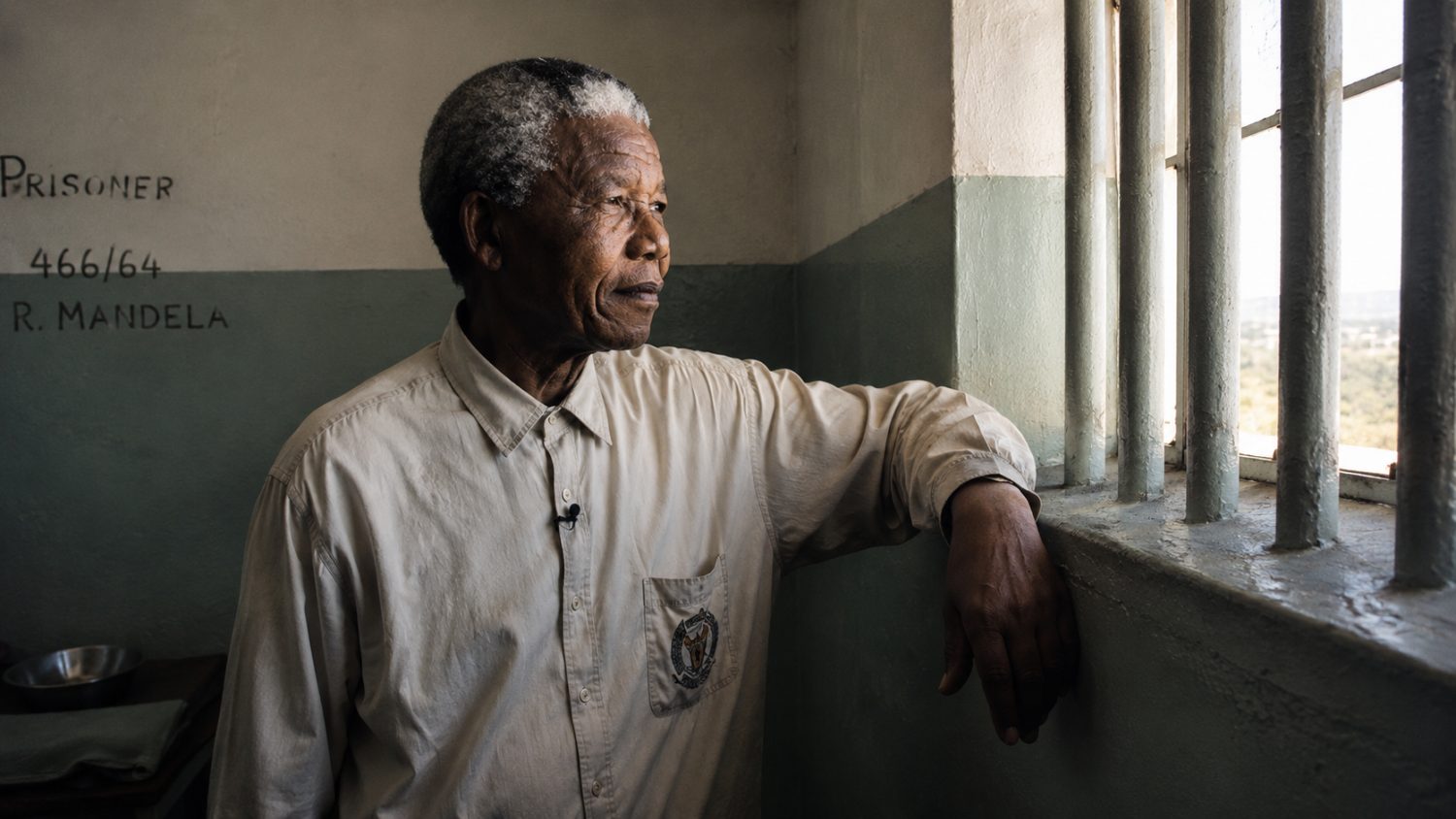
Mandela's activism eventually led to his arrest. In 1964, he was sentenced to life imprisonment for sabotage and anti-government activities. He spent 27 years in prison, much of that time on Robben Island under harsh conditions.

Prison life was extremely difficult. Mandela and other prisoners were forced into hard labor, isolated from society, and denied many freedoms. Yet despite the suffering, Mandela did not allow bitterness to completely consume him.
During those years, he became a global symbol of resistance against injustice. Around the world, people demanded his release and condemned apartheid.
What makes Mandela remarkable is that imprisonment did not destroy his vision for peace. Many expected him to emerge filled with revenge and anger. Instead, he emerged with a broader vision for reconciliation and national healing.
Release and Rise to Presidency
Mandela was released from prison in 1990 after increasing international pressure and internal instability forced the South African government to negotiate reforms.
His release marked one of the most important moments in modern African history.
Rather than encouraging violent revenge, Mandela called for negotiation, dialogue, and reconciliation between Black and white South Africans. He understood that endless retaliation could destroy the nation and lead to civil war.
In 1994, South Africa held its first fully democratic election in which citizens of all races could vote. Mandela became the country's first Black president.
For millions of people, his election represented hope, freedom, and the possibility of a more united future.
Mandela's Leadership Philosophy
One of Mandelau2019s greatest strengths was his understanding of power and responsibility.
Many leaders throughout history fought oppression only to later become oppressive themselves once they gained authority. Mandela consciously tried to avoid this path. He believed leadership should serve the people rather than glorify the individual leader.
His presidency emphasized:
- reconciliation instead of revenge,
- institution-building instead of dictatorship,
- democracy instead of personal rule,
- unity instead of racial hatred,
- and peace instead of endless retaliation.
Mandela knew that anger alone could not build a stable society. Although many Black South Africans had legitimate reasons to feel resentment after decades of oppression, Mandela encouraged forgiveness and coexistence.
This approach made him respected globally.
Refusing to Cling to Power
One of the most admired aspects of Mandela's life was his willingness to leave power voluntarily.
After serving one presidential term from 1994 to 1999, Mandela stepped down instead of attempting to remain in office indefinitely. This decision became one of the strongest demonstrations of responsible leadership in Africa and the wider world.
In many countries, leaders changed constitutions, weakened democratic systems, or suppressed opposition in order to stay in power for decades. Mandela chose the opposite path.
He showed that leadership is not about permanently controlling a nation. True leadership includes knowing when to step aside and allow institutions to continue beyond one individual.
This decision strengthened South Africa's democracy and increased Mandela's moral authority worldwide.
His example is often contrasted with leaders who remained in office too long and whose countries later suffered political instability, corruption, economic collapse, or social unrest.
Promotion of Peace and Reconciliation
Mandela became internationally respected because he promoted peace during a period when South Africa could easily have descended into violent conflict.
One famous example was his support for national unity through sports, especially during the 1995 Rugby World Cup. Rugby had traditionally been associated with white South Africans, yet Mandela publicly supported the national team as a symbol of reconciliation between races.

This act helped reduce tensions and encouraged citizens to begin seeing themselves as part of one nation rather than permanently divided groups.
Mandela also supported the Truth and Reconciliation Commission, which investigated crimes committed during apartheid. Instead of widespread revenge trials, the commission focused on uncovering truth, encouraging confession, and promoting healing.
Although the process was controversial and imperfect, it reflected Mandelau2019s desire to prevent endless cycles of hatred.
Global Influence and Moral Authority
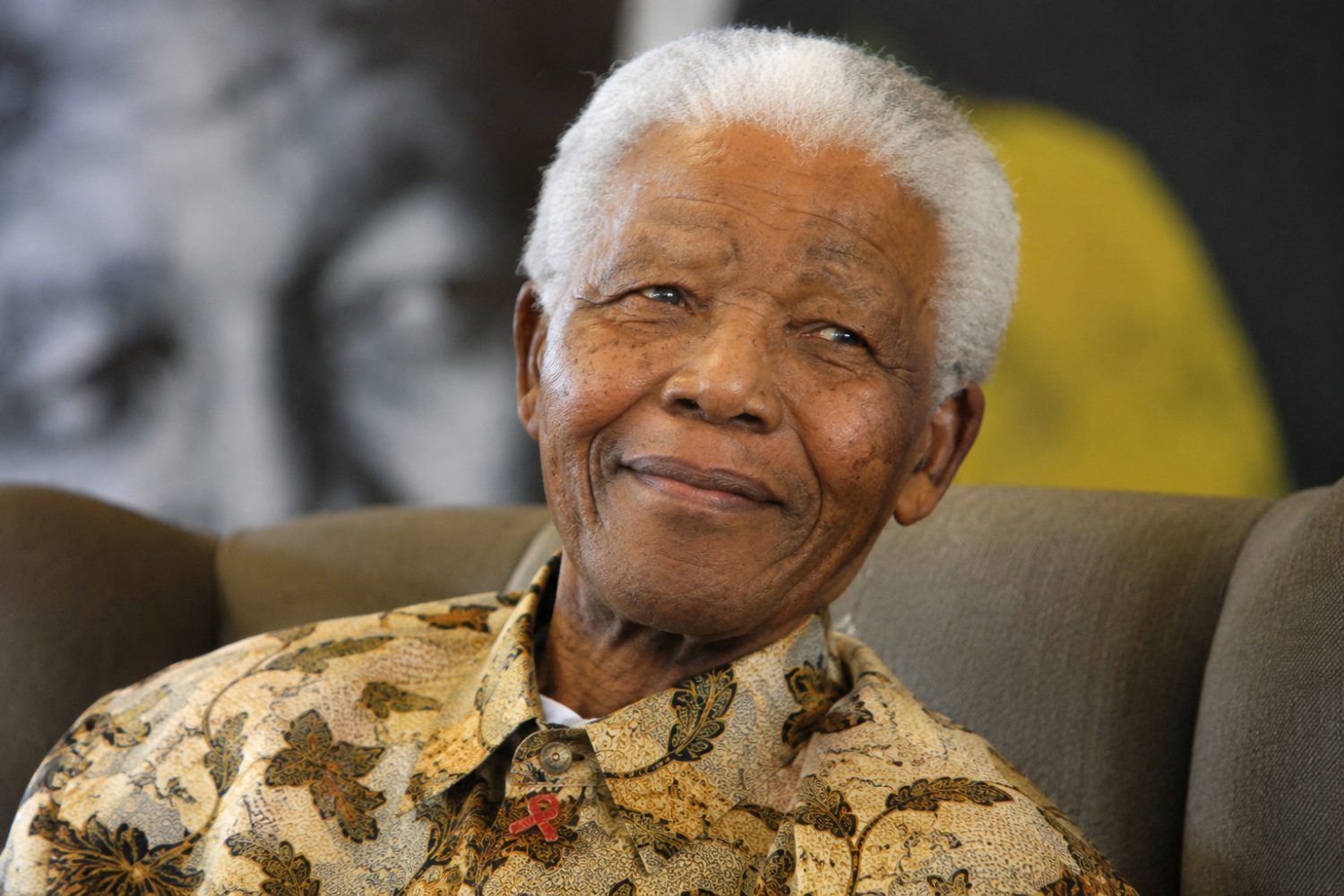
After leaving office, Mandela remained one of the world's most respected moral figures.

He used his influence to support:
- peace initiatives,
- anti-poverty campaigns,
- HIV/AIDS awareness,
- human rights,
- education,
- and conflict resolution.
Mandela became larger than politics itself. He represented endurance, dignity, and the belief that societies can change without destroying themselves through revenge.
Even people who disagreed with some of his political decisions often respected his personal discipline, humility, and commitment to peace.

Criticisms and Complexities
Although Mandela is widely admired, some critics argue that post-apartheid South Africa still struggled with economic inequality, crime, and social tensions. Others believe some compromises made during negotiations allowed certain structural inequalities to remain.
Some more radical groups also believed reconciliation sometimes came at the cost of deeper economic transformation.
These criticisms show that Mandela was not viewed as perfect by everyone. However, even many critics acknowledge that his leadership helped prevent large-scale racial conflict during a highly dangerous transitional period.

His legacy therefore remains complex but overwhelmingly influential.
Lessons from Nelson Mandela's Life
Mandela's life teaches several important lessons:
1. Leadership Requires Sacrifice
Mandela sacrificed personal comfort, freedom, and many years of his life for what he believed was justice.
2. Power Should Be Used Responsibly
He demonstrated that gaining power is not enough; how a leader uses power matters greatly.
3. Forgiveness Can Prevent Destruction
Rather than promoting endless revenge, Mandela encouraged reconciliation and nation-building.
4. Strong Leaders Know When to Leave
One of Mandela's greatest acts of leadership was voluntarily stepping down from power.
5. Unity Is Essential for National Stability
Mandela understood that divided societies require healing, dialogue, and shared identity to survive peacefully.
Mandela's Lasting Legacy
Nelson Mandela died on December 5, 2013, but his influence continues around the world. He remains a global symbol of resilience, justice, humility, and peace-oriented leadership.
For many Africans, Mandela represents the possibility that leadership can be moral rather than purely self-serving. He showed that a leader does not become great merely by holding power, but by using power with discipline, wisdom, and restraint.
His life continues to inspire political leaders, students, activists, and ordinary citizens who believe that freedom should be accompanied by responsibility and that peace is often stronger than revenge.
Mandela's legacy endures because he proved that true greatness is not measured only by victory over enemies, but by the ability to unite people after conflict and to leave power without destroying the nation one fought to build.