
Understanding Why People Act the Way They Do
Let's start with a simple question.
Why do people keep doing things even after they already have enough?
Some people keep looking for more money. Some keep trying to help everyone.nSome just want to stay safe and avoid trouble.
They are not all chasing the same thing.
To understand this, we need two ideas:
- The Point of Harmony
- The Contentment Orientation Model (COM)
The Point of Harmony: What the Mind Is Always Looking For

Every human being, at every moment, is trying to reach a certain inner feeling.
That feeling is not happiness. It is not excitement. It is not success.
It is the feeling of this is okay for now.
This feeling is called the Point of Harmony.
When a person reaches this point:

- They feel settled
- They relax a little
- They stop pushing for a moment
But this point does not stay forever. It changes as life changes.
Once the feeling fades, the person starts acting again to reach it.
So remember this:
The human mind is always trying to reach a Point of Harmony.
Why People Reach Harmony in Different Ways
Here is the important part.
Even though everyone wants harmony, not everyone reaches it in the same way.
Some people only feel settled when they are taking something. Some only feel settled when they are giving something. Some only feel settled when they are safe and surviving.
This difference is called Contentment Orientation.
Orientation means direction.
The Contentment Orientation Model (COM) explains:
- what kind of actions can bring harmony to a person
- what kind of actions never will
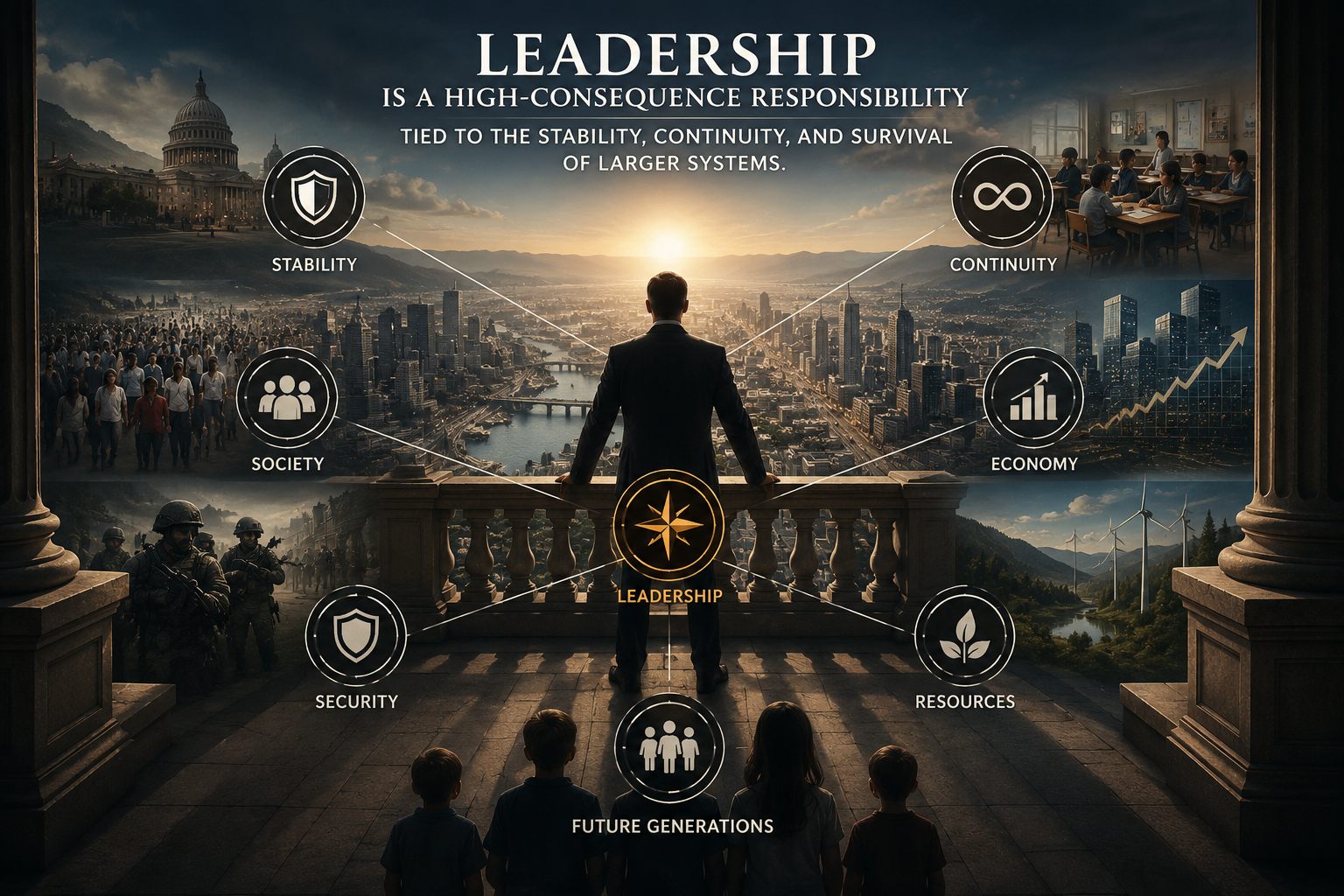
Orientation stays mostly the same over time, even though behavior may change.
The Extractive Orientation: Harmony Through Taking
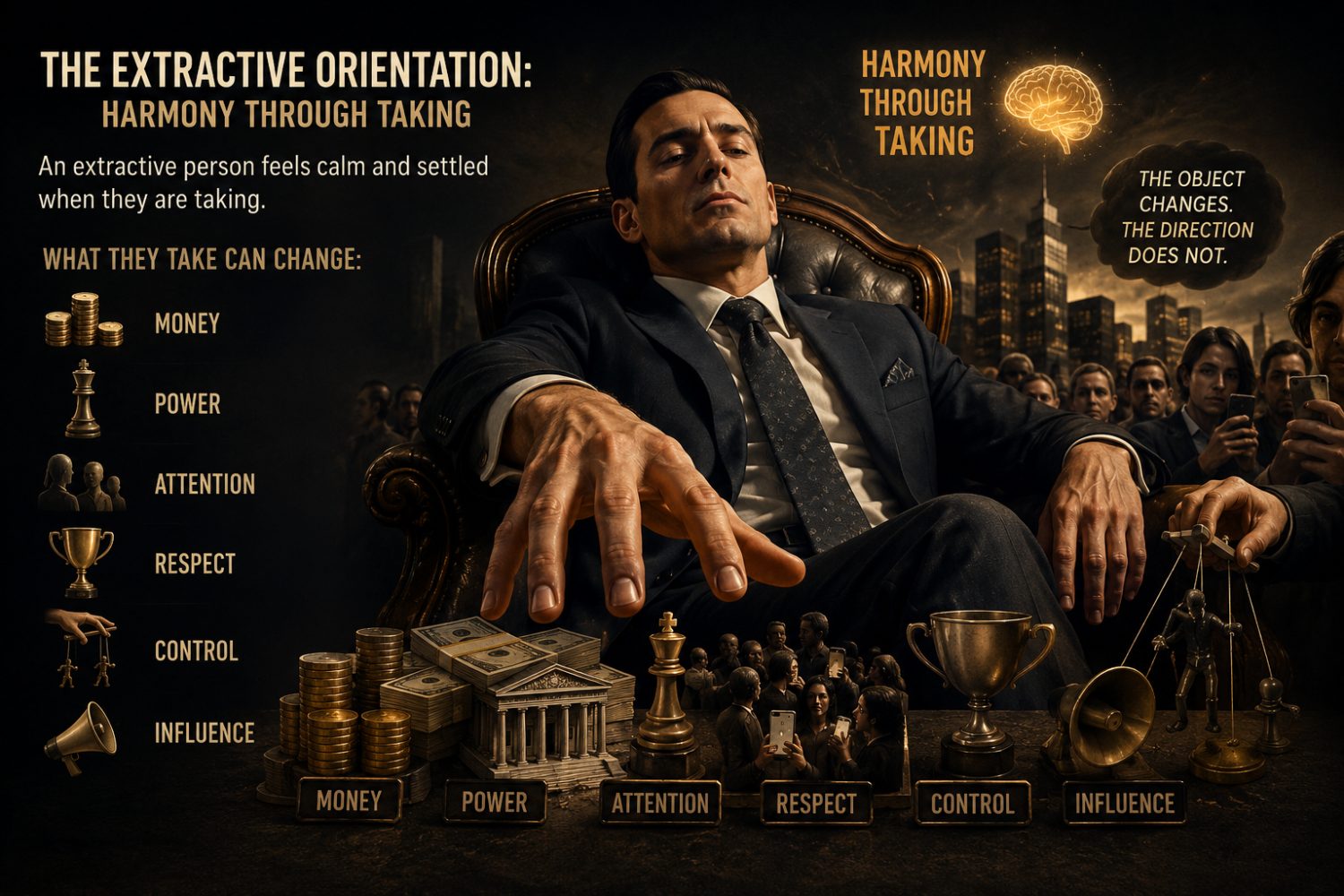
An extractive person feels calm and settled when they are taking.
What they take can change:
- Money
- Power
- Attention
- Respect
- Control
- Influence
When they are young, harmony might come from:
- Being feared
- Being the boss
- Controlling classmates
When they grow older, harmony might come from:
- Wealth
- Leadership
- Status
The object changes. The direction does not.
Even when an extractive person gives, they are usually giving to be able to take later.
This is why some people never stop, even when they have enough. Stopping makes them uncomfortable.
They do not feel calm unless they are in a state of taking.
The Generative Orientation: Harmony Through Giving

A generative person feels calm and settled when they are giving or building.
They reach harmony when they:
- Help people
- Teach others
- Improve a system
- Protect something important
- Create something useful
Their Point of Harmony keeps changing:
- I can help these people
- I can fix this problem
- I can protect this group

Once one goal is reached, another appears.
Generative people may take money, power, or leadership roles but not because taking feels good. They take so they can give more.
This is why some people keep helping even when nobody is watching. Giving itself brings harmony to them.
The Adaptive Orientation: Harmony Through Survival
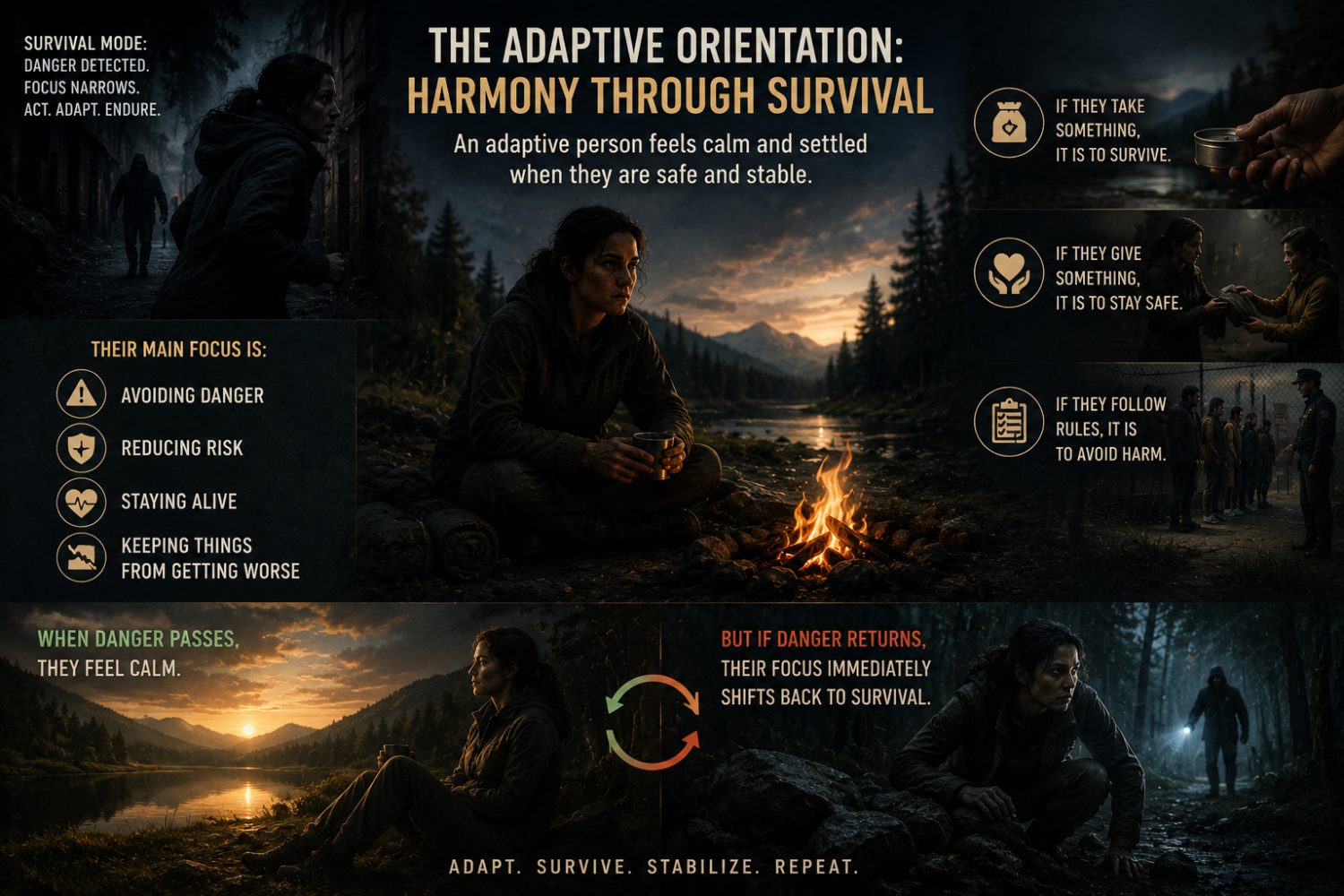
An adaptive person feels calm and settled when they are safe and stable.
Their main focus is:
- Avoiding danger
- Reducing risk
- Staying alive
- Keeping things from getting worse

If they take something, it is to survive. If they give something, it is to stay safe. If they follow rules, it is to avoid harm.
When danger passes, they feel calm but if danger returns, their focus immediately shifts back to survival.
This is why some people:
- Survive very hard situations
- But struggle to grow when things improve
Their inner system is trained for staying alive, not expanding.
An Important Rule: Orientation Is Stable
Here is a rule you should remember:
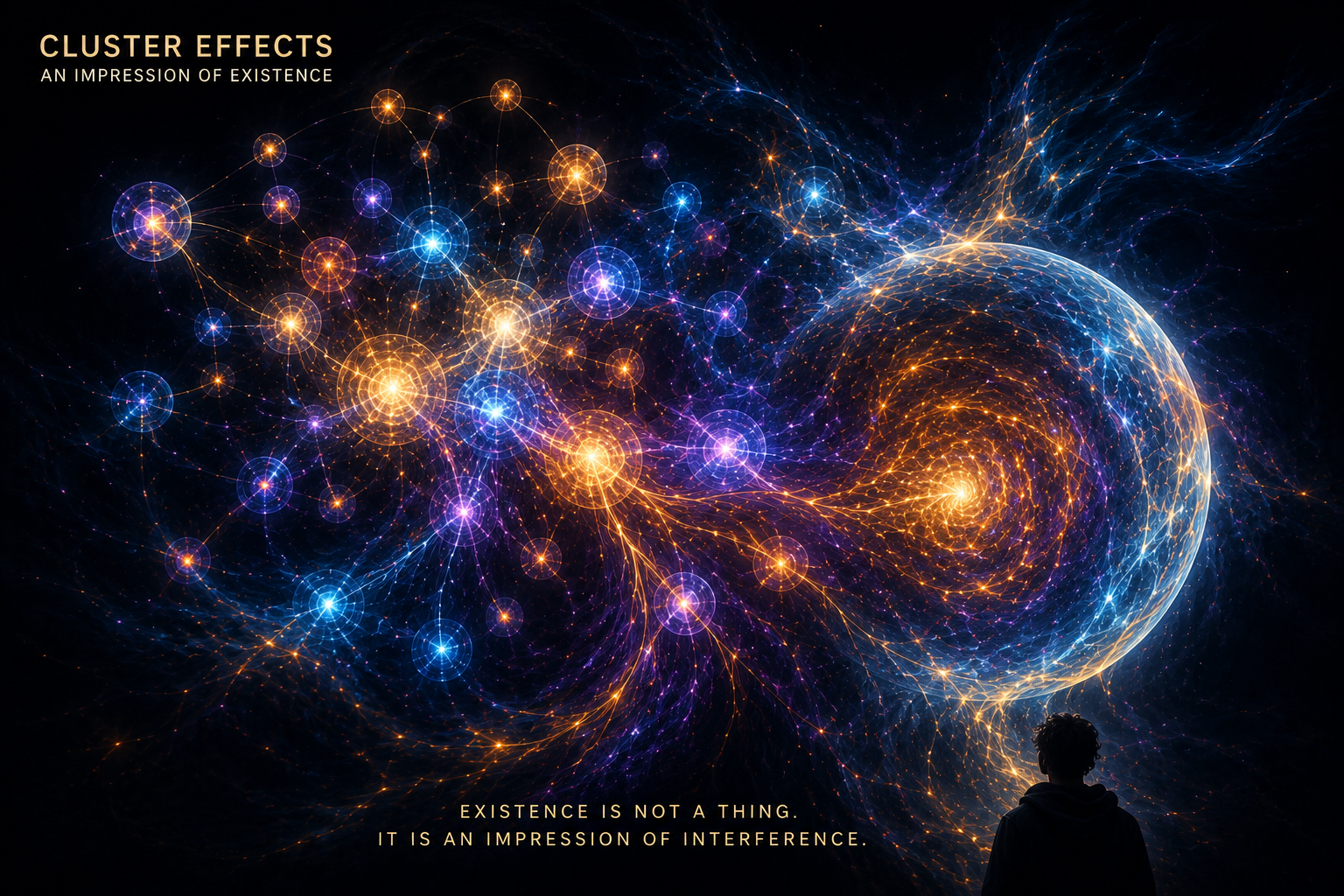
Behavior can change. Orientation usually does not.
People may act differently in different situations:
- A generous person may act tough
- A survivor may look selfish
- A taker may look kind
But under certain conditions, people show their true direction.
- Takers take more
- Givers give carefully
- Survivors pull back and protect themselves
This is why a careful long term observation reveals people more than short term interactions.
Why Actions Can Be Misleading
You cannot judge a person's orientation by one action.
A person can give money and still be extractive if they give only to gain respect.
A person can take power and still be generative if they take it to protect others.
A person can look selfish and still be adaptive if they are trying to survive.
So the real question is not:
What did they do?
The real question is:
What made them feel settled inside after they did it?
Why This Model Matters in Real Life
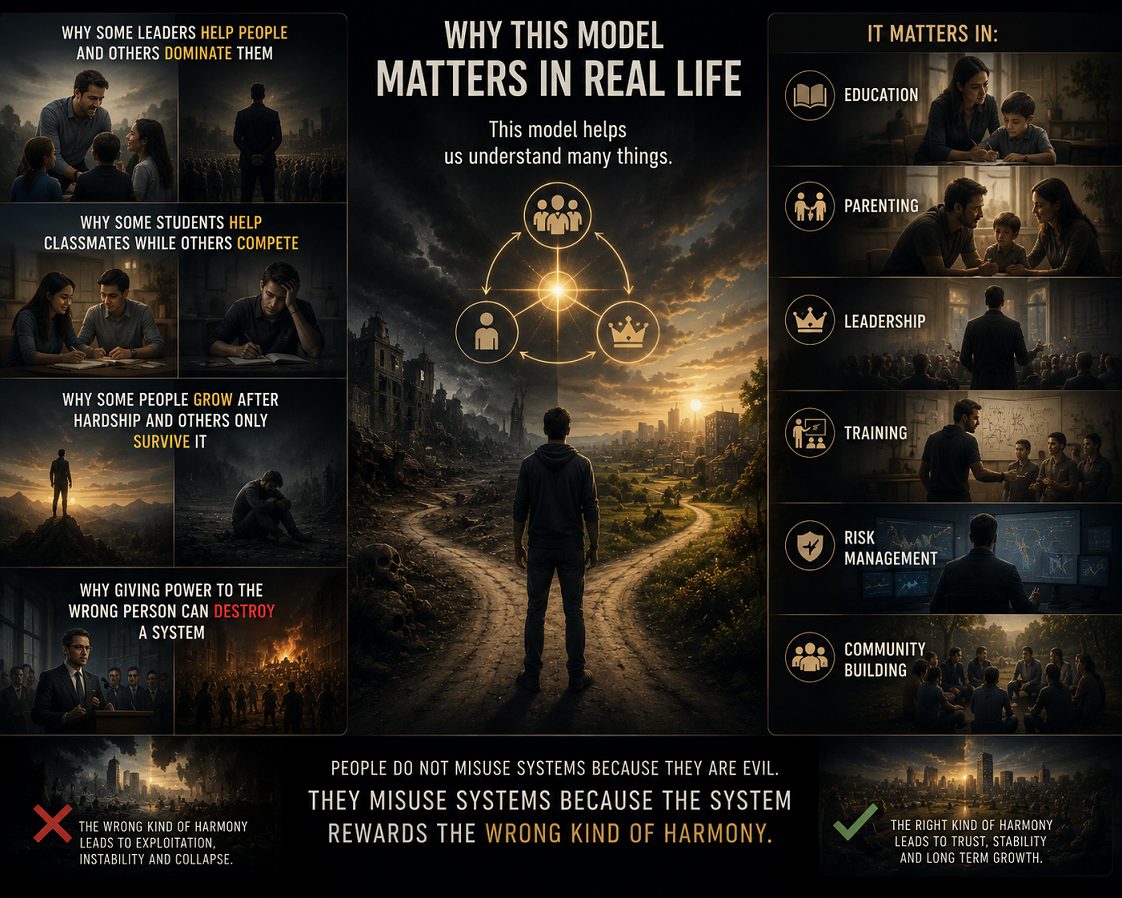
This model helps us understand many things:
- Why some leaders help people and others dominate them
- Why some students help classmates while others compete
- Why some people grow after hardship and others only survive it
- Why giving power to the wrong person can destroy a system
It matters in:
- Education
- Parenting
- Leadership
- Training
- Risk management
- Community building
People do not misuse systems because they are evil. They misuse systems because the system rewards the wrong kind of harmony.
The Big Idea to Remember
Let's end with this:
Everyone is trying to feel settled inside. The difference is what kind of action can give them that feeling.
The Contentment Orientation Model helps us understand that difference.
Once you see it, people's behavior becomes much easier to understand.