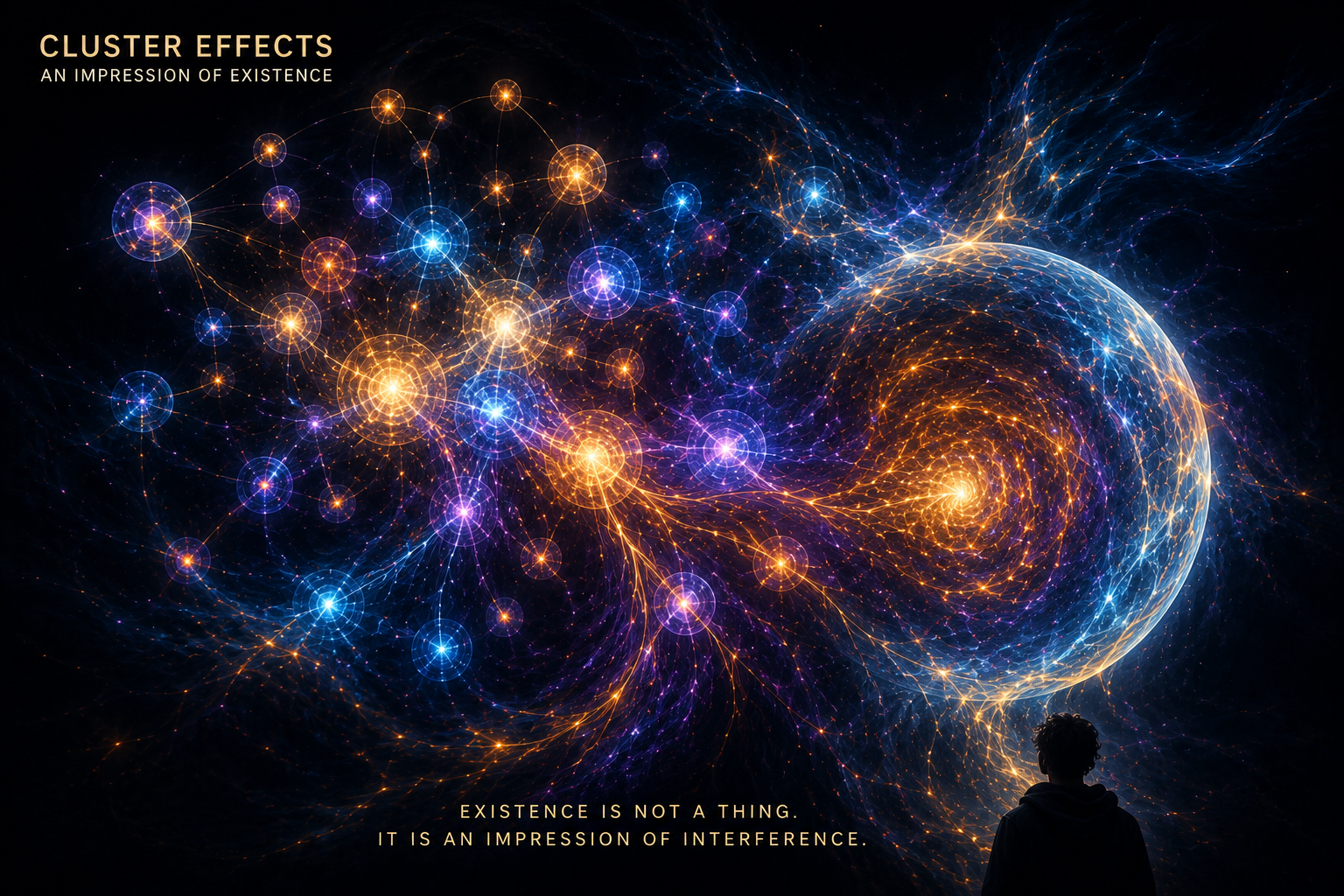
A Simple Introduction
Introduction
The Existential Effects Framework is a philosophical idea that tries to explain how we recognize existence and reality.
Instead of starting from the idea that objects simply exist, the framework starts from a different question:
How do we know something exists?
According to the framework, existence is only recognized through effects.
If something produces no effect at all, then within the system it is treated as non-existence.
This does not always mean the thing is absolutely absent. It means that there is no detectable interaction, interference, or consequence that allows its existence to be known.
1. Existence Through Effects
The first idea in the framework is:
Existence is only noted through effects.
An effect is any change, interaction, influence, or interference that can alter the state of another condition.

For example:
- Heat changing the temperature of water
- Light entering the eye
- Magnetism moving iron filings
- Sound vibrating air
These are all effects.
Without effects:
- no interaction occurs,
- no change is observed,
- and existence cannot be confirmed.
This means the framework does not treat existence as something automatically guaranteed.
Instead:
Effects are what make existence recognizable.
2. Non-Existence
The framework separates non-existence into two ideas.
Perfect Non-Existence
Perfect non-existence is complete absence.
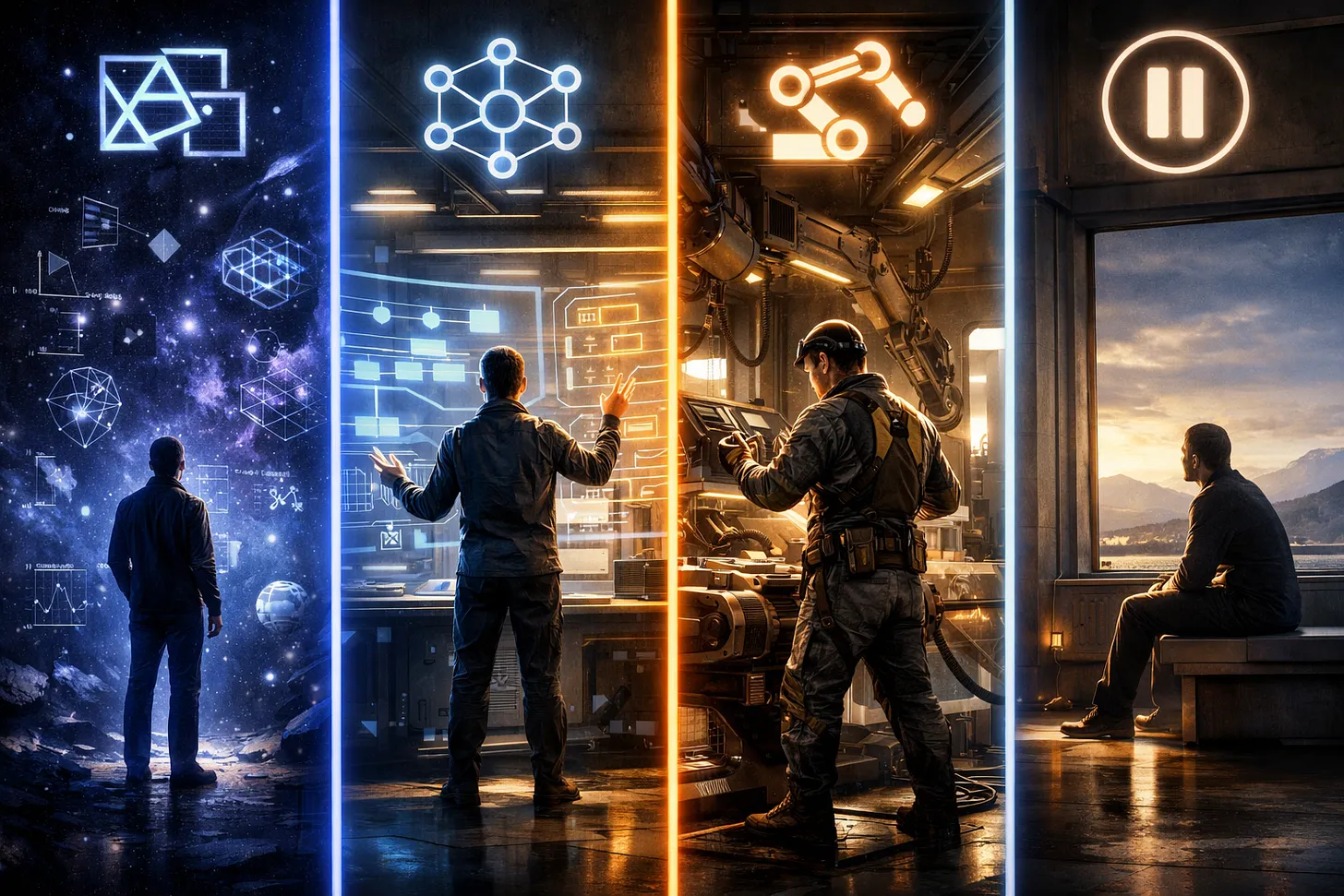
In this state:
- no effect exists,
- no interaction occurs,
- no influence can happen,
- and no change can be produced.
Because nothing can interfere with anything else, existence cannot begin from perfect non-existence.
This leads to one of the framework's central ideas:
Non-existence cannot trigger existence.
Imperfect Non-Existence
Imperfect non-existence refers to conditions where effects may exist but are not yet interacting with anything else.
In this situation:

- activity may exist locally,
- but no observable consequence has formed yet.
The effect remains unnoticed until interaction begins.
3. Local Effects
A local effect is:
an effect that occurs within a region of space and time and does not leave that locality directly.
Local effects are confined.
They may exist in a location without being noticed by other systems.
For example:
- the interaction inside a magnet,
- atomic interactions inside matter,
- electrical interactions inside a circuit.
According to the framework:
The true local effect is often inaccessible.
What people normally observe is not the original local effect itself, but the consequences produced from it.

4. Projected Effects
A projected effect happens when:
a local effect causes another effect outside its original location.
Examples include:
- light from a bulb,
- heat from fire,
- sound traveling through air,
- magnetic influence affecting another object.
The projected effect depends on the original local effect.
Without the original local effect:
- the projected effect would not exist.
The framework therefore describes projected effects as:
inherited consequences of local effects.
5. Pseudo-Existence
The framework introduces the idea of pseudo-existence.
An absolutely isolated local effect that never interacts with anything else becomes:
systemically invalid.
This means:
- it may possess local activity,
- but because it never participates in larger interaction systems,
- it behaves almost like non-existence from the perspective of the wider system.
Thus:
observable existence requires participation.
6. Cascaded Effects
The framework also explains that observable reality is not made from single isolated effects.
Instead:

effects trigger other effects.
This creates chains and networks of interaction.
These are called cascaded effects.
A cascaded effect is:
an observable effect capable of triggering additional effects.
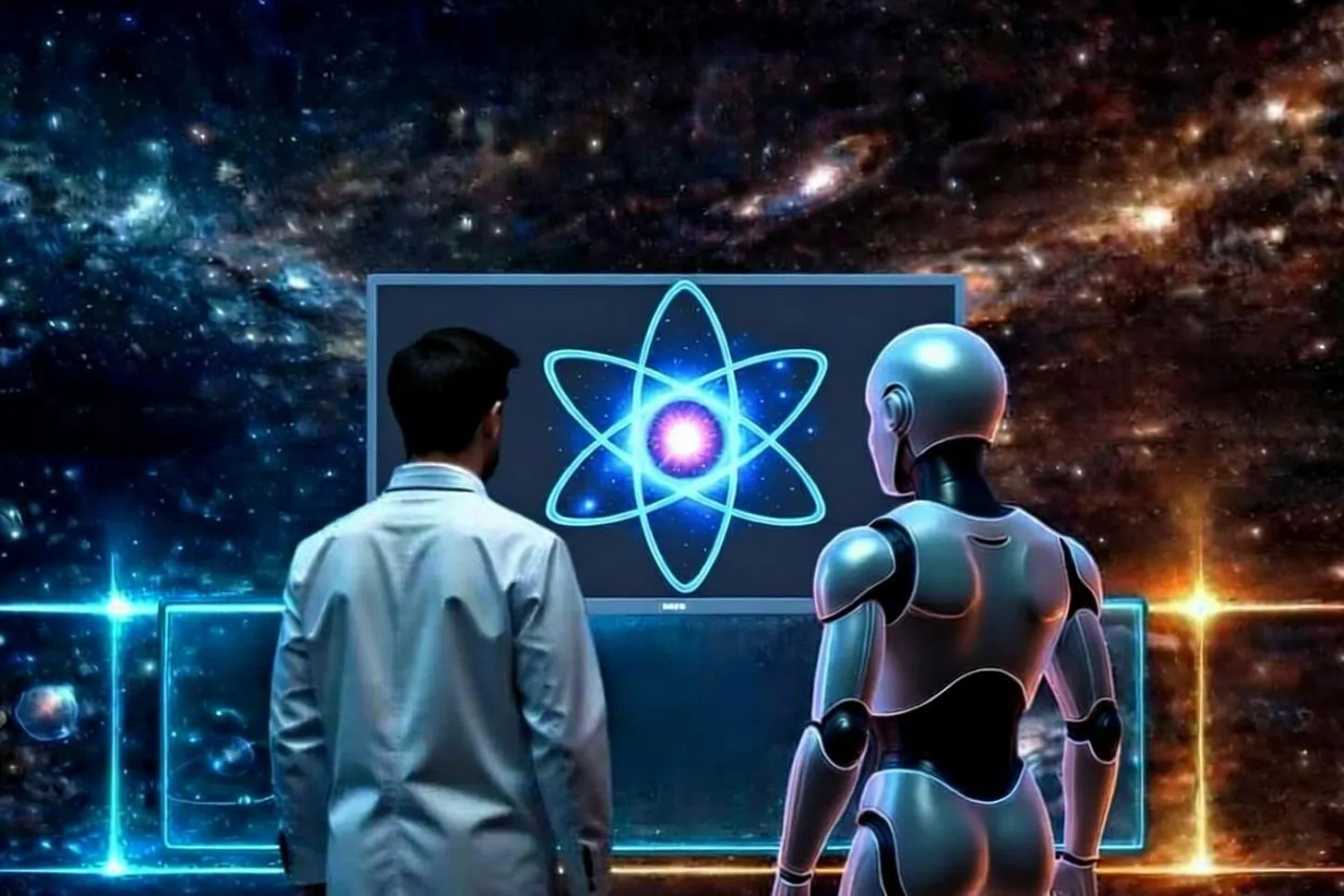
For example:
- electricity powers a bulb,
- the bulb produces light,
- the light enters the eye,
- the brain processes the signal,
- a reaction occurs.
Each stage becomes part of a larger effect chain.
Reality therefore appears stable because effects continuously trigger other effects.
7. Appendages
Projected effects that depend on original local effects are called Appendages
Appendages do not exist independently.
Instead:
- they participate in larger effect systems,
- carry inherited consequences,
- and help maintain observable reality.
For example:

The visible magnetic influence around a magnet is not treated as the original local effect itself.
Instead:
- the hidden local interaction creates projected magnetic consequences,
- and these projected consequences behave as appendages.
8. Appendage Impressions
Many appendages can combine together.
When this happens, they form Appendage Impressions
An appendage impression is:
a higher-level pattern created from clustered projected effects.

This means:
- observable objects,
- systems,
- structures,
- and experiences
may actually be clusters of interacting appendages.

According to the framework:
humans mostly observe appendage impressions rather than original local effects.
9. Space-Time Shock
The framework also proposes that projected effects may not propagate perfectly.
There may be:
- delays,
- fluctuations,
- interruptions,
- or brief withdrawals of effects.
This idea is called Space-Time Shock.
Space-time shock refers to:

instability or lag between projected effects during propagation.
At higher levels of complexity, clustered appendage impressions may smooth out these fluctuations.
This can create the appearance of:
- stable reality,
- continuous motion,
- and predictable systems.
10. Observable Reality
According to the Existential Effects Framework:
reality is not simply made of permanently existing objects.
Instead:
- local effects create projected effects,
- projected effects form cascades,
- cascades generate appendages,
- appendages cluster into appendage impressions,
- and these stable configurations become observable reality.
Thus:
reality is understood as a continuously interacting system of effects.
Conclusion
The Existential Effects Framework is for now a philosophical attempt to rethink existence using interaction and effects as the foundation.

The framework suggests that:
- existence is recognized through effects,
- isolated effects cannot fully participate in reality,
- observable systems are built from cascaded interactions,
- and reality itself may be an existing configuration of projected consequences.
Rather than viewing existence as fixed and permanent, the framework views reality as:
dynamic, relational, and effect-based.
This framework is still developing and continues to explore how interaction, propagation, and observable structure may shape our understanding of reality.