A Cooperative Infrastructure Framework for Humanity's Expansion Beyond Earth

Introduction
Humanity's advancement into space has largely been built around isolated systems. Satellites, relays, telescopes, orbital stations, and scientific platforms are commonly designed as independent units carrying their own propulsion systems, cooling structures, energy infrastructure, communication arrays, stabilization systems, and operational management frameworks.
While this approach has enabled remarkable technological achievements, it also introduces major limitations in scalability, accessibility, maintenance, sustainability, and international participation.
A large portion of orbital deployment cost is often consumed not by the primary mission payload itself, but by the supporting systems required to sustain it independently in space. A communications satellite, for example, may dedicate a significant percentage of its total structure and launch mass to maintaining itself rather than performing its intended function.
As orbital deployment becomes more complex, expensive, and crowded, the long-term sustainability of isolated infrastructure systems becomes increasingly difficult.
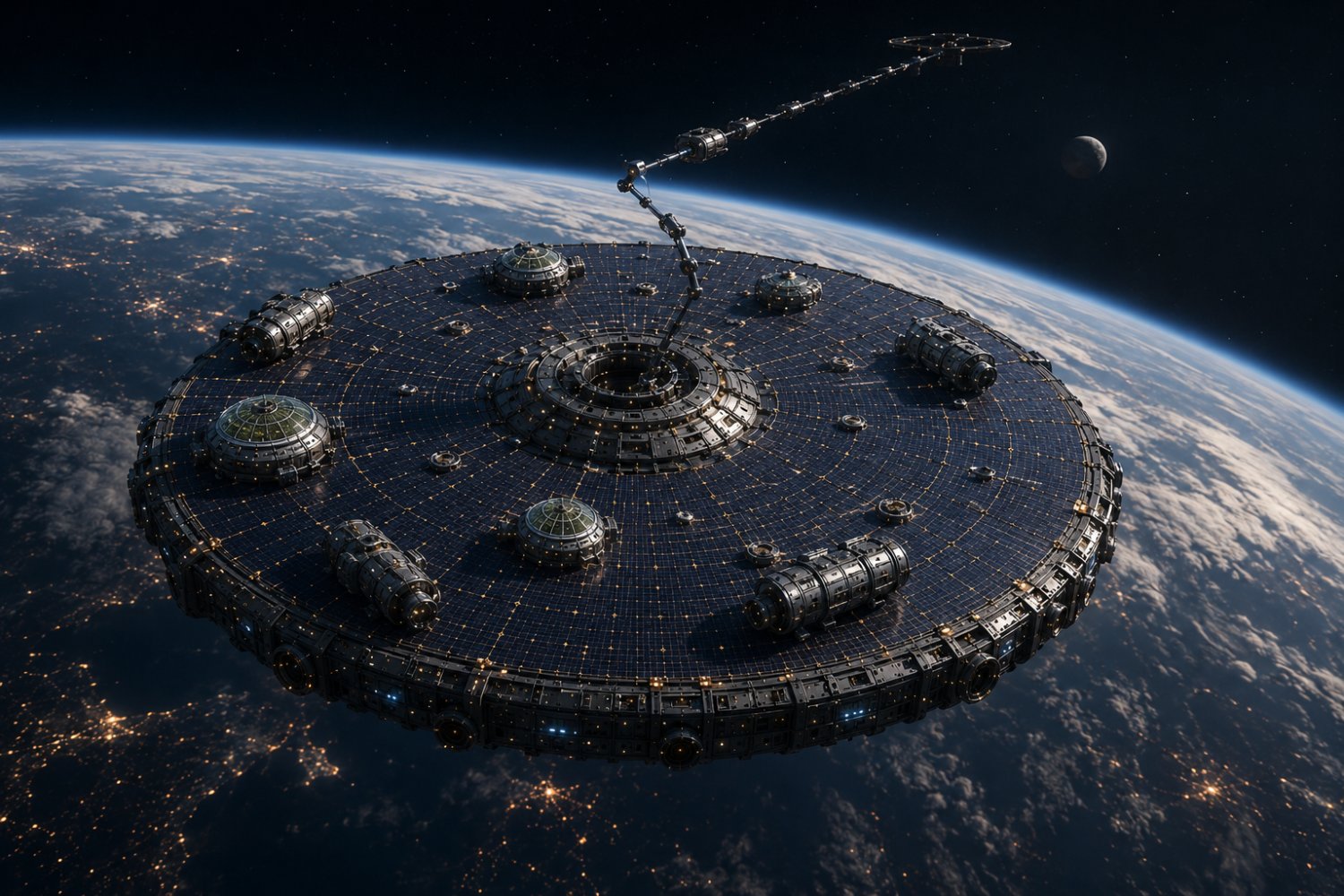
The Exoplanetary Fleet System is proposed as an alternative infrastructure philosophy for humanity's future beyond Earth.
Rather than treating every orbital object as a fully independent machine, the Exoplanetary Fleet System proposes a cooperative infrastructure architecture built around shared orbital and deep-space anchor networks capable of supporting multiple connected systems simultaneously.
The concept is centered around the belief that humanity's expansion beyond Earth will eventually require:
- persistent infrastructure,
- shared operational systems,
- modular scalability,
- and international collaboration on a level larger than isolated national missions.

The Problem With Isolated Orbital Systems
Modern orbital infrastructure is highly fragmented.
Most deployed systems operate independently, requiring:
- dedicated power systems,
- propulsion structures,
- communication frameworks,
- cooling systems,
- stabilization architecture,
- and maintenance limitations.
This creates several long-term inefficiencies:
- repeated duplication of infrastructure,
- high launch costs,
- short operational lifespan,
- difficult maintenance access,
- and limited accessibility for developing nations.
As humanity expands farther into space, these inefficiencies become increasingly unsustainable.
A future involving thousands or millions of independent orbital systems may eventually create:
- severe orbital congestion,
- resource inefficiency,
- maintenance instability,
- communication fragmentation,
- and increased collision risk.
The Exoplanetary Fleet System proposes that future space development should evolve from isolated mission deployment toward interconnected infrastructure ecosystems.
Shared Infrastructure Philosophy
The core philosophy of the Exoplanetary Fleet System is simple:

Infrastructure that can be shared collectively should not require unnecessary duplication.
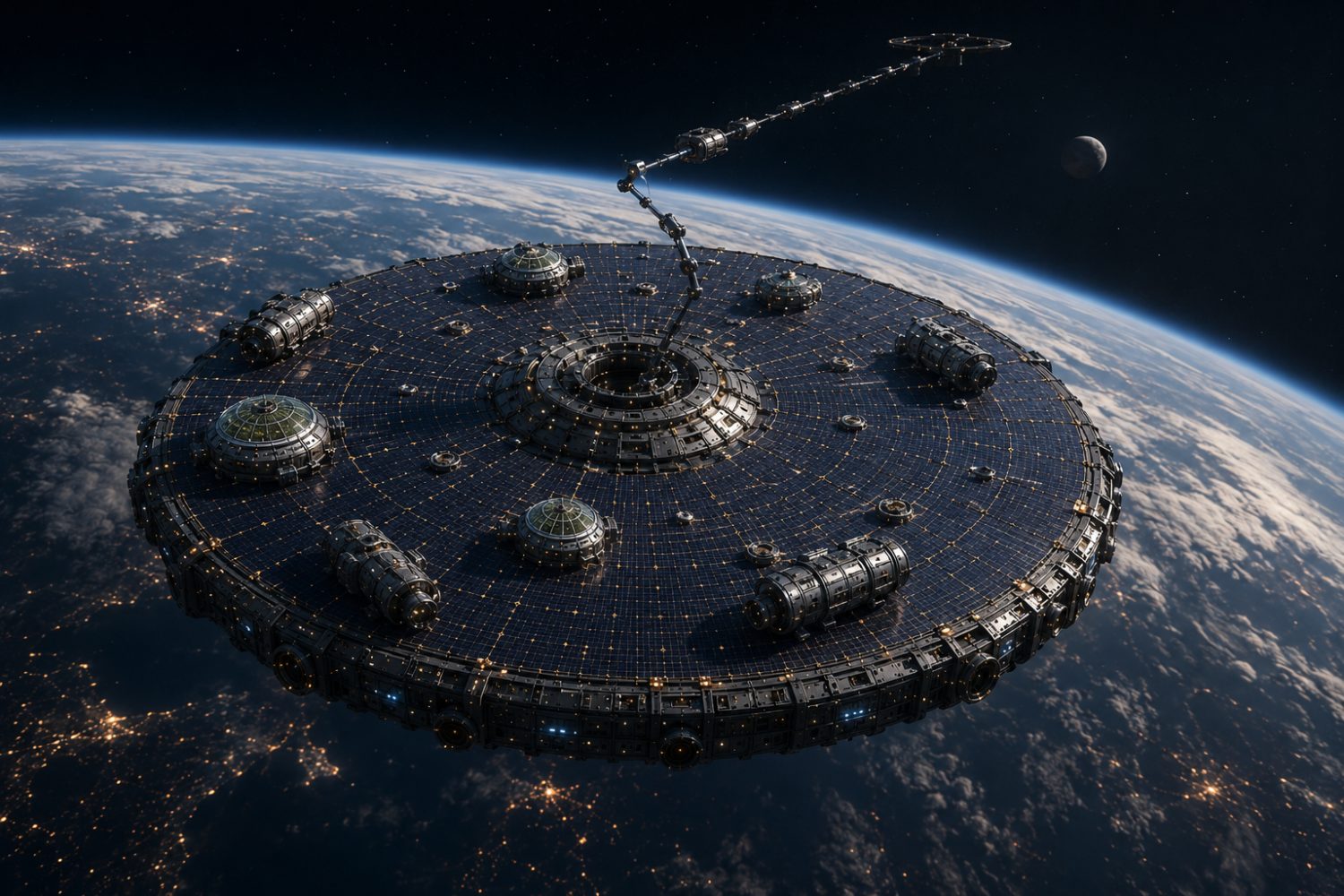
Under the Fleet framework, centralized orbital anchor structures provide shared resources to attached systems operating within their infrastructure network.
Rather than launching fully independent systems, organizations may deploy specialized payload modules capable of selectively utilizing Fleet-provided infrastructure.
These shared resources may include:
- centralized energy distribution,
- communication routing,
- navigational assistance,
- thermal regulation,
- tracking systems,
- stabilization support,
- repair coordination,
- docking infrastructure,
- autonomous operational management,
- and long-duration maintenance support.
This allows operational systems to focus more heavily on their intended mission capability while reducing duplicated support infrastructure.
The result is a potentially more scalable and cooperative orbital ecosystem.
Collaborative International Infrastructure
One of the central goals of the Exoplanetary Fleet System is expanding humanity's collective access to advanced orbital capability.
Many nations currently face major barriers to establishing long-term space infrastructure due to:
- launch costs,
- maintenance complexity,
- technological limitations,
- and independent infrastructure requirements.
The Fleet System proposes a collaborative alternative.
Under this framework, nations, scientific institutions, and authorized organizations may contribute:
- infrastructure modules,
- research systems,
- maintenance technology,
- energy systems,n
- communications architecture,
- or specialized payloadsnto a collectively governed infrastructure network.n
Instead of every nation requiring full independent orbital capability, participating members may gain access to shared infrastructure resources through standardized Fleet systems.
This collaborative model may:
- reduce deployment barriers,
- increase scientific participation,
- improve infrastructure efficiency,
- encourage peaceful cooperation,
- and accelerate humanity's collective advancement beyond Earth.
The Fleet System is not intended to replace national space programs, but to create an infrastructure layer capable of supporting broader cooperative expansion.
Cluster-Based Spatial Architecture
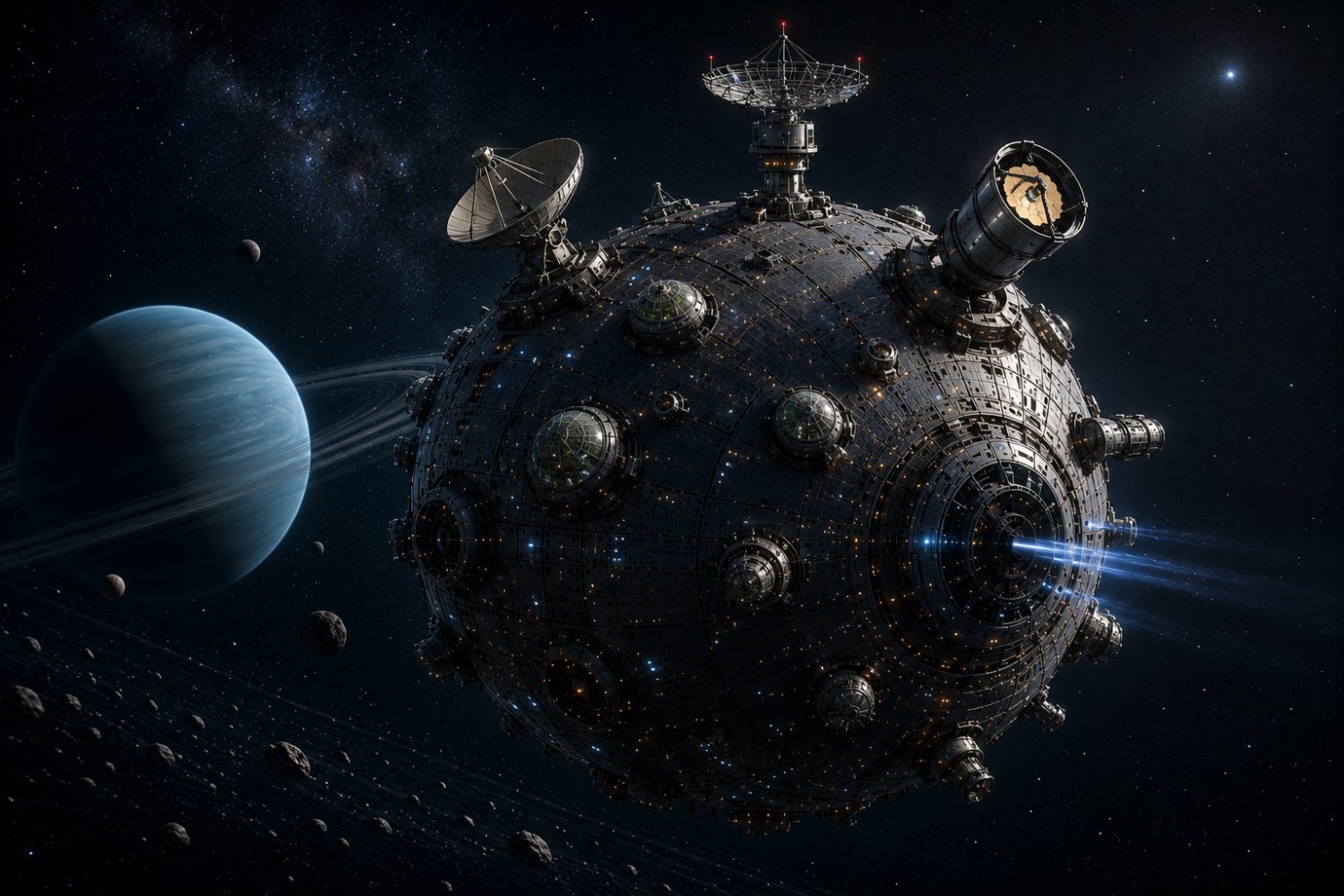
The Exoplanetary Fleet System is divided into multiple operational clusters categorized according to:
- distance,
- trajectory,
- environmental conditions,
- communication limitations,
- and functional requirements.
These clusters are not politically defined territories, but operational environments optimized for different conditions in space.
Near-Earth Clusters
Near-Earth clusters may require:
- rapid propulsion responsiveness,
- debris avoidance optimization,
- high maneuverability,
- maintenance accessibility,
- and continuous traffic coordination.
These clusters would likely support:
- communications,
- navigation,
- scientific observation,
- and high-density orbital infrastructure.
Polar and Trajectory-Sensitive Clusters
Certain orbital regions require continuous adjustment and stabilization due to trajectory dynamics.
These clusters may prioritize:
- orientation correction systems,
- stabilization infrastructure,
- adaptive propulsion management,
- and advanced positioning control.
Inner Solar System Clusters
As infrastructure expands farther beyond Earth, environmental conditions become increasingly difficult.
Inner solar system clusters may require:
- increased radiation shielding,
- autonomous operational capability,
- long-duration communication systems,
- and greater infrastructure redundancy.
These clusters may support:
- exploration,
- relay systems,
- scientific observation,
- and interplanetary transportation coordination.
Outer Solar and Deep-Space Clusters
Outer clusters may require highly specialized systems due to extreme environmental conditions.
These may include:
- nuclear-powered energy systems,
- advanced signal amplification,
- autonomous repair systems,
- high-resilience survival architecture,
- and long-duration operational independence.

Such clusters may eventually become critical for:
- deep-space exploration,
- interplanetary communication,
- and long-term expansion beyond the solar system.
Infrastructure Persistence and Modularity
One of the major goals of the Fleet System is moving away from disposable infrastructure models.
Traditional orbital systems are often replaced entirely once damaged, outdated, or depleted.
The Fleet System instead promotes:

- modular infrastructure,
- replaceable systems,
- upgradeable components,
- and persistent operational architecture.
This allows infrastructure to evolve over time rather than requiring complete replacement after limited operational cycles.
Modules may eventually be:
- upgraded,
- detached,
- replaced,
- repaired,
- or repurposed without requiring destruction of the larger infrastructure network.
Persistent infrastructure may become one of the most important requirements for sustainable human expansion beyond Earth.
Governance and International Coordination
The Exoplanetary Fleet System is proposed as a non-territorial and anti-militarization infrastructure framework.
Its primary purpose is:
- scientific advancement,
- cooperative infrastructure development,
- long-term sustainability,
- planetary defense,
- and peaceful expansion beyond Earth.
The system is intended to operate under an internationally registered governing structure composed of participating member states and organizations.
Critical operational authority would not reside within a single nation, corporation, or individual entity, but within distributed treaty-based governance systems requiring collective authorization for high-level operational commands.
The system is designed to reduce the risks associated with:

- infrastructure monopolization,
- orbital fragmentation,
- and weaponized territorial competition in space.
Defensive Infrastructure and Planetary Protection
The Exoplanetary Fleet System is intentionally anti-offensive militarization in philosophy.
However, the framework recognizes the necessity of centralized defensive infrastructure related to:

- asteroid detection,
- collision prevention,
- debris interception,
- radiation monitoring,
- and infrastructure protection.
As humanity becomes increasingly dependent on orbital systems, planetary defense and infrastructure protection may become essential components of long-term civilization stability.
Defensive systems within the Fleet framework are intended for preservation and protection rather than territorial dominance.

Infrastructure Rather Than Missions

The Exoplanetary Fleet System is ultimately based on a broader civilizational principle:
Humanity's long-term future beyond Earth cannot depend entirely on isolated and disposable missions.
Sustainable expansion requires:

- persistent infrastructure,
- collaborative operational systems,
- scalable architecture,
- and long-term continuity frameworks.
Throughout history, civilization has advanced most effectively when infrastructure became:

- shared,
- standardized,
- scalable,
- and persistent.
Roads transformed trade. Ports transformed navigation. Electrical grids transformed industry. Communication networks transformed global coordination.
Humanity's future beyond Earth may eventually require a similar transition: from isolated missions toward cooperative infrastructure ecosystems capable of supporting civilization on a much larger scale.