Introduction
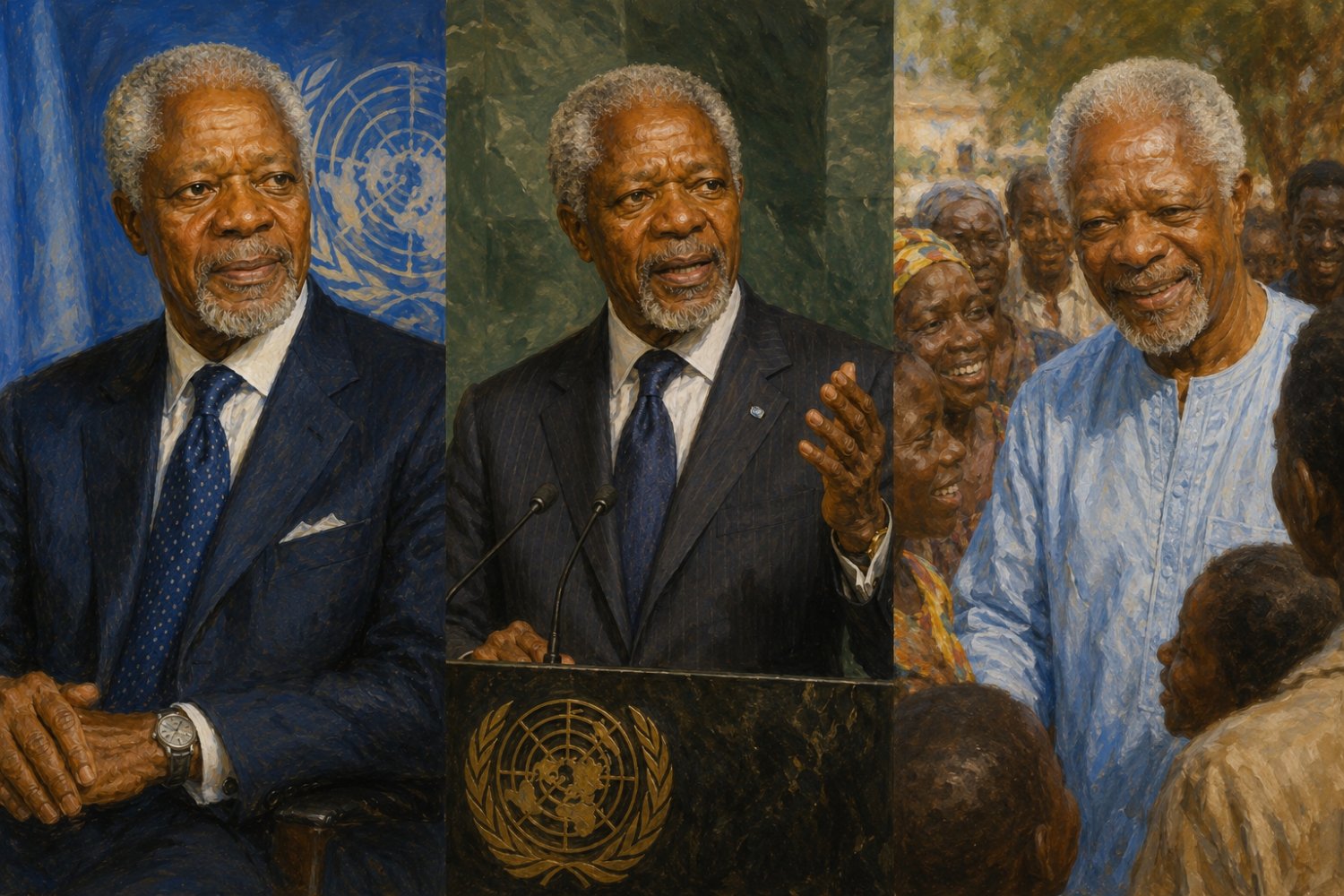
Kofi Annan remains one of the most respected international diplomats of the modern era.nBorn in Ghana on April 8, 1938, he rose from modest beginnings to become the seventh Secretary-General of the United Nations, serving from 1997 to 2006.
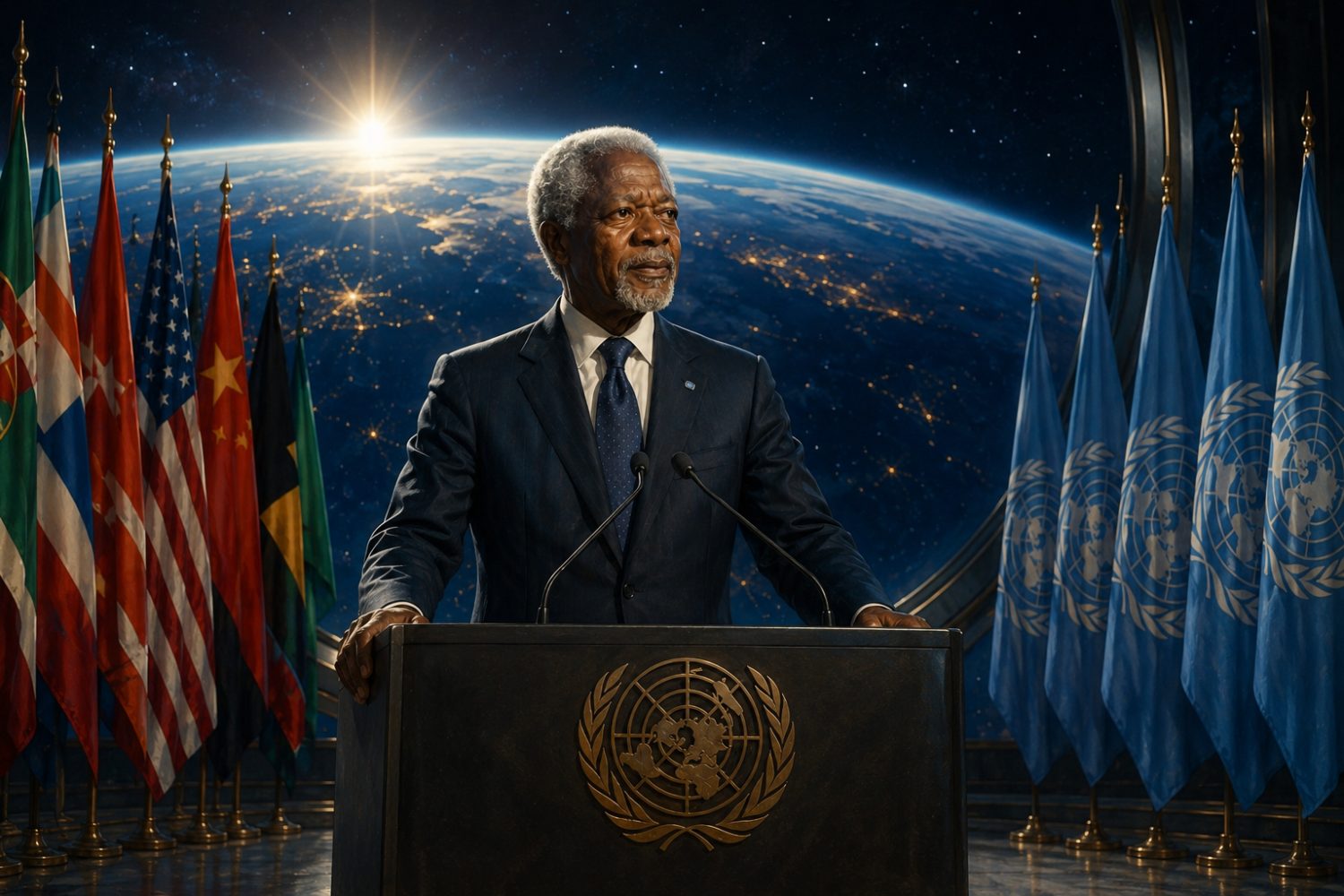
To many around the world, he symbolized calm leadership, intellectual diplomacy, moral restraint, and the belief that international cooperation could reduce conflict and human suffering. Unlike leaders driven by conquest, personal domination, or political spectacle, Annan was known for patience, negotiation, and quiet influence.
He became especially admired because he tried to humanize global leadership. He spoke not only about war and politics, but also about poverty, disease, human dignity, corruption, peacekeeping, and the moral responsibility of nations toward weaker societies.
In an age where many leaders used power aggressively, Kofi Annan often demonstrated that influence could come through wisdom, credibility, and ethical consistency rather than fear.
Early Life and Education
Kofi Atta Annan was born in Kumasi, in the Gold Coast colony, now known as Ghana. He came from a respected family connected to traditional leadership structures, but he was raised with discipline, humility, and education-centered values.
He studied economics in Ghana before continuing his education internationally. He attended institutions in the United States and Switzerland, gaining exposure to global political and economic systems. This international educational background helped shape his diplomatic worldview.
Unlike many political leaders who emerged through military struggle or aggressive populism, Annan developed through administration, policy, negotiation, and institutional service.
Rise Within the United Nations
One remarkable aspect of Kofi Annan's life is that he rose through the internal ranks of the United Nations itself.
He was not initially a famous politician or revolutionary figure. Instead, he spent decades working inside the UN system in administrative and humanitarian roles. This gave him deep understanding of the institution's strengths and weaknesses.
His experience included:
- budget management,
- refugee affairs,
- peacekeeping operations,
- personnel administration,
- humanitarian coordination,
- and international crisis management.
This gradual rise gave him credibility because he understood the organization from within rather than merely using it for political prestige.
When he became Secretary-General in 1997, he was the first Black African to hold the position in such a globally influential period.
Leadership Style
1. Calm and Non-Aggressive Leadership
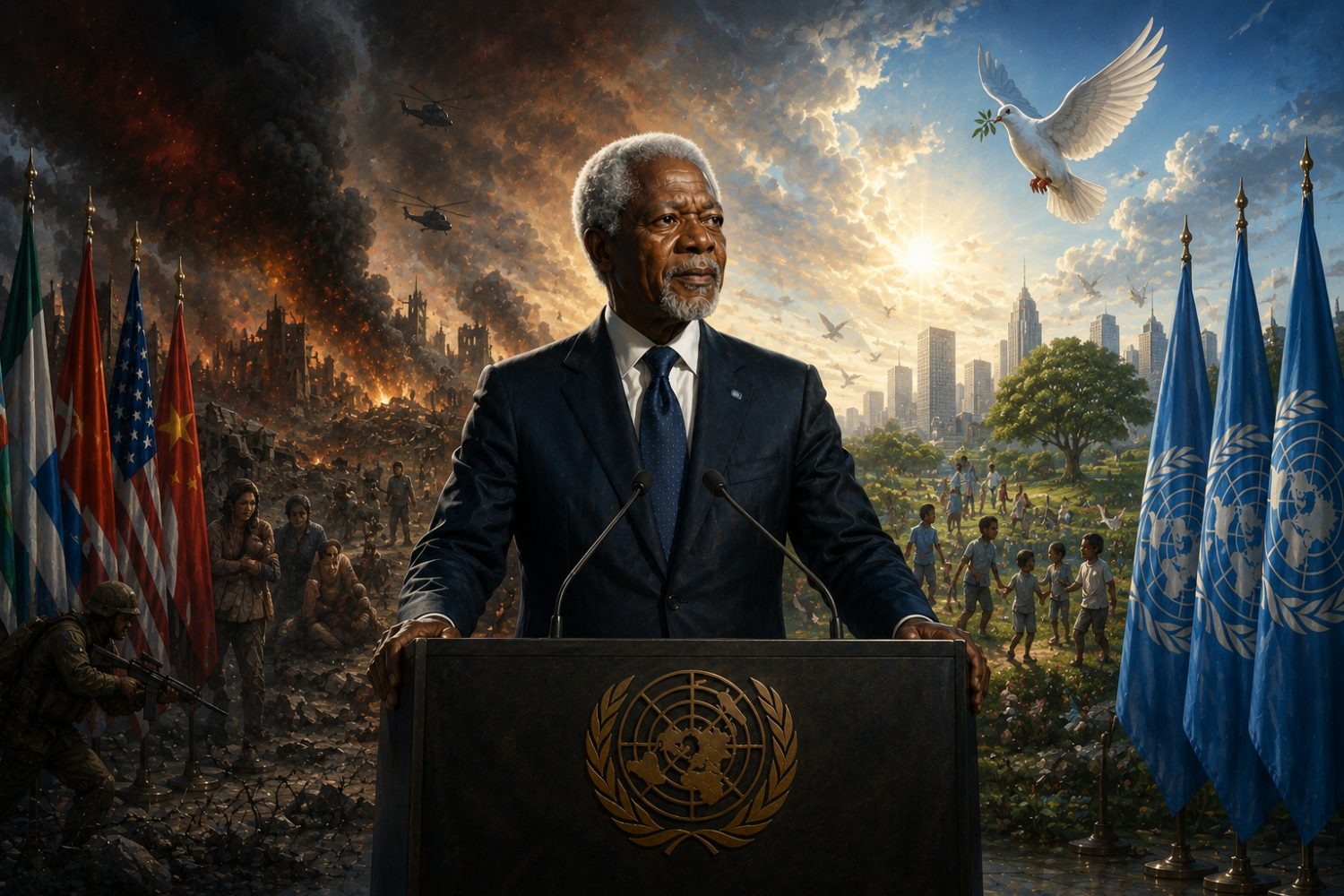
Kofi Annan rarely governed through intimidation or emotional extremism.nHis strength came from composure.
Even during severe global crises, he usually spoke with restraint and precision. This gave him credibility among both powerful and weaker nations.
He represented a style of leadership built on:
- listening,
- negotiation,
- mediation,
- intellectual clarity,
- and moral persuasion.
Many admired him because he appeared emotionally disciplined even under enormous international pressure.
2. Belief in Human Dignity
One of Anna's strongest qualities was his insistence that global politics should serve ordinary human beings.
He frequently emphasized:
- human rights,
- humanitarian protection,
- anti-poverty initiatives,
- healthcare,
- education,
- and peacebuilding.
He argued that the legitimacy of governments and international institutions depended on whether they improved human lives.
This humanitarian emphasis became central to his legacy.
3. Global Health and Development
Kofi Annan strongly supported international cooperation against:
- HIV/AIDS,
- extreme poverty,
- hunger,
- and underdevelopment.
He played a major role in advancing the Millennium Development Goals (MDGs), which attempted to create measurable international development targets.
His administration helped increase global attention toward Africa's developmental struggles without reducing the continent merely to stereotypes of conflict or dependency.
4. Peace and Conflict Resolution
Annan invested heavily in diplomacy and peace negotiations.
He worked on issues involving:
- Iraq,
- the Middle East,
- Sudan,
- the Balkans,
- and several African conflicts.
He believed wars should be prevented before they escalated rather than managed after destruction occurred.
His philosophy reflected the idea that leadership should reduce human suffering rather than amplify division for political advantage.
Why Many People Admire Him
Moral Credibility
Kofi Annan became respected partly because he appeared personally modest.
He was not known for excessive personal luxury, cult-like self-glorification, or authoritarian behavior.
People often felt he genuinely cared about humanity beyond political performance.
Intellectual Diplomacy
He showed that diplomacy could be intelligent without being weak.
He often balanced powerful nations carefully while still defending humanitarian principles.
This required unusual emotional and strategic discipline.
Respect Across Different Cultures
Because of his calm personality and measured language, he was respected in:
- Africa,
- Europe,
- North America,
- parts of Asia,
- and many humanitarian institutions.
Very few international leaders maintain that level of broad cross-cultural respect.
Major Achievements
Nobel Peace Prize
In 2001, Kofi Annan and the United Nations jointly received the Nobel Peace Prize.
The award recognized efforts toward:
- organized international cooperation,
- peace promotion,
- and a more humane global order.
UN Reforms
Annan attempted to modernize and reform parts of the UN bureaucracy.
He sought greater transparency, efficiency, and responsiveness within the organization.

Though reforms were only partially successful, he helped push conversations about institutional accountability.
Responsibility to Protect (R2P)
One important concept associated with his leadership was the emerging principle that the international community should not remain passive during genocide or mass atrocities.
This idea later became known as Responsibility to Protect.
It reflected his belief that sovereignty should not become a shield for extreme human rights abuses.
Weaknesses, Criticisms, and Controversies
A balanced evaluation of Kofi Annan must also recognize serious criticisms and limitations.

1. Rwanda Genocide Failure
One of the most painful criticisms connected to Annan concerns the 1994 Rwandan genocide.
At the time, he headed UN peacekeeping operations.
The UN failed to prevent the genocide despite warning signs.
Critics argued that the organization acted too slowly and too cautiously.
Although Annan later expressed deep regret and acknowledged institutional failure, many believe the UN response remains one of the greatest moral failures in modern international history.
This tragedy permanently affected his reputation and worldview.
2. Srebrenica and Peacekeeping Weakness
The UN also faced criticism regarding the Srebrenica massacre.
Peacekeeping structures proved inadequate against determined military violence.
These failures exposed the limitations of international diplomacy when powerful nations hesitate to intervene decisively.
3. Oil-for-Food Scandal
During Annan's tenure, the UN became associated with the Iraq Oil-for-Food scandal.
The program itself was intended to reduce humanitarian suffering under sanctions, but corruption and mismanagement occurred.
Although direct personal wrongdoing by Annan was never proven, criticism intensified because his son had indirect links to a company involved in the controversy.
This damaged public trust in parts of the UN system.
4. Limited Power of the United Nations
Some critics argue Annan represented the weakness of international institutions more than their strength.
The UN Secretary-General often depends heavily on the political will of powerful countries.
As a result, Annan sometimes appeared unable to stop wars or enforce humanitarian ideals consistently.
This created frustration among people who expected stronger global intervention.

Personality and Character
Kofi Annan's public personality was defined by:
- patience,
- elegance,
- intelligence,
- emotional control,
- diplomacy,
- and reflective speech.
He rarely appeared reckless or vindictive.
Unlike leaders who cultivate fear or chaos, Annan projected stability and seriousness.
This does not mean he was perfect. At times critics believed he was overly cautious or too diplomatic toward powerful governments.
However, many people still viewed him as morally sincere even when institutional outcomes failed.
Death and Legacy
Kofi Annan died on August 18, 2018, at the age of 80.
Following his death, tributes came from governments, humanitarian organizations, religious leaders, and civil society groups around the world.
He left behind the image of a leader who believed that power should serve peace rather than domination.
His legacy continues to influence discussions about:
- humanitarian intervention,
- international cooperation,
- ethical leadership,
- African global representation,
- and peaceful diplomacy.

Overall Assessment
Kofi Annan was not a revolutionary military hero or a populist political giant.nHis importance came from something quieter but deeply influential:
the attempt to bring morality, restraint, and human dignity into global leadership.
His life demonstrates that leadership does not always require aggression or personal glorification. Sometimes influence comes through credibility, calmness, intelligence, and the consistent defense of human values.
At the same time, his career also reveals the painful limits of international institutions. Good intentions alone cannot always overcome geopolitical interests, bureaucracy, or global power struggles.
Yet despite those limitations, Kofi Annan remains widely remembered as one of the most dignified and ethically respected international figures of his generation.