
From Storytelling to Self-Exaltation: The Changing Character of Popular Music
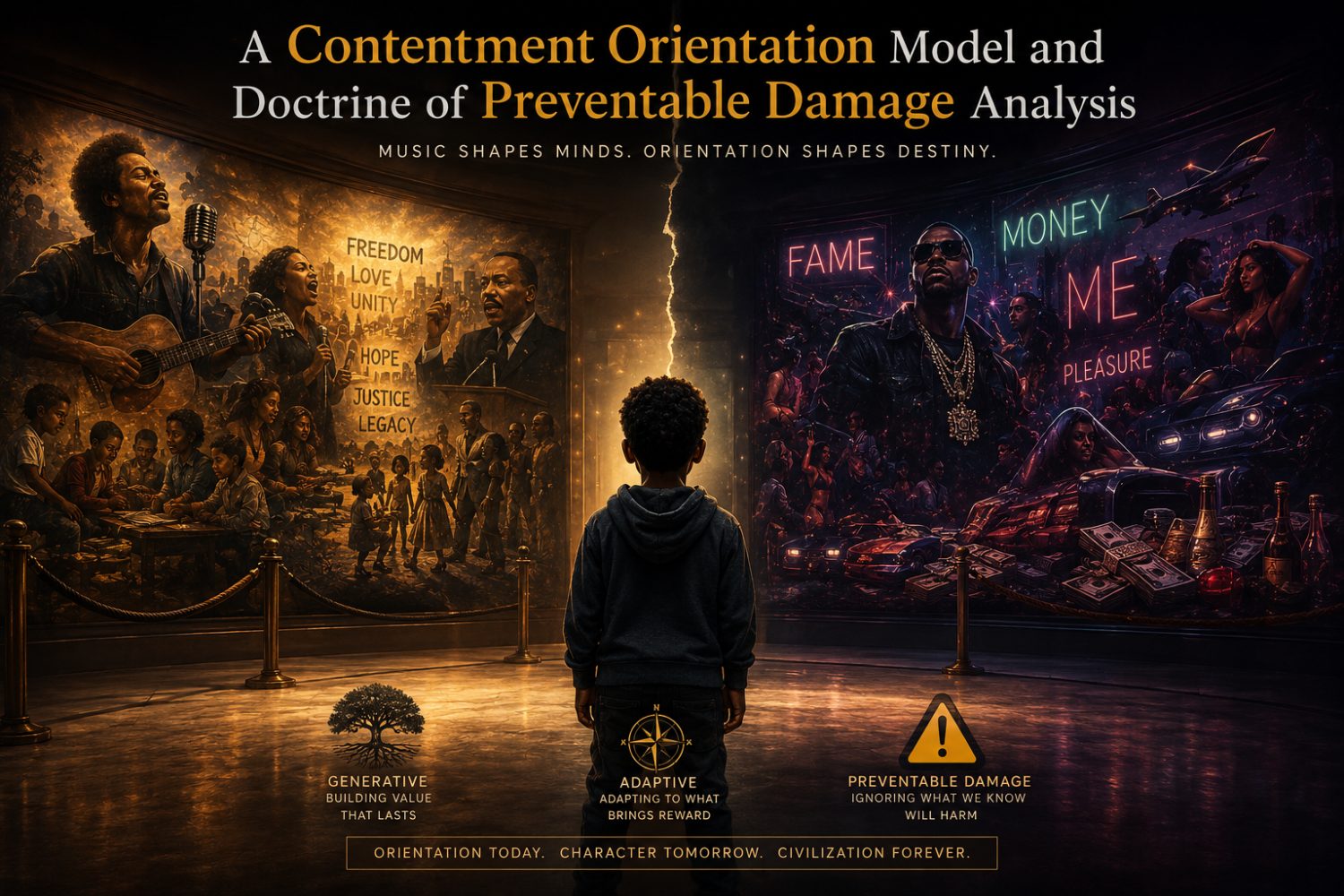
A Contentment Orientation Model and Doctrine of Preventable Damage Analysis
Music has always been more than sound. It is one of the strongest ways human beings pass ideas from one generation to another. A song can teach a child how to speak, how to admire success, how to understand love, how to handle anger, and even how to imagine the future. Because of that, music is never harmless noise. It helps shape character.
That is why the direction of modern music deserves serious attention. This article is not written to insult artists or to pretend that every older song was pure and every newer song is corrupt. That would be too simple. The real issue is deeper. It is about orientation. What kind of human life does music encourage? What does it reward? What does it normalize? What kind of values does it repeatedly place before the minds of listeners?
When viewed through the Contentment Orientation Model (COM), much of today’s mainstream music appears to have moved away from Generative Orientation and toward a more dominant Adaptive Orientation. In simple terms, instead of music mainly encouraging people to build, contribute, sacrifice, and create lasting value, a large part of the industry now rewards music that adapts to attention, fame, algorithms, status, and instant pleasure. The music may sound powerful, but the message often becomes shallow.
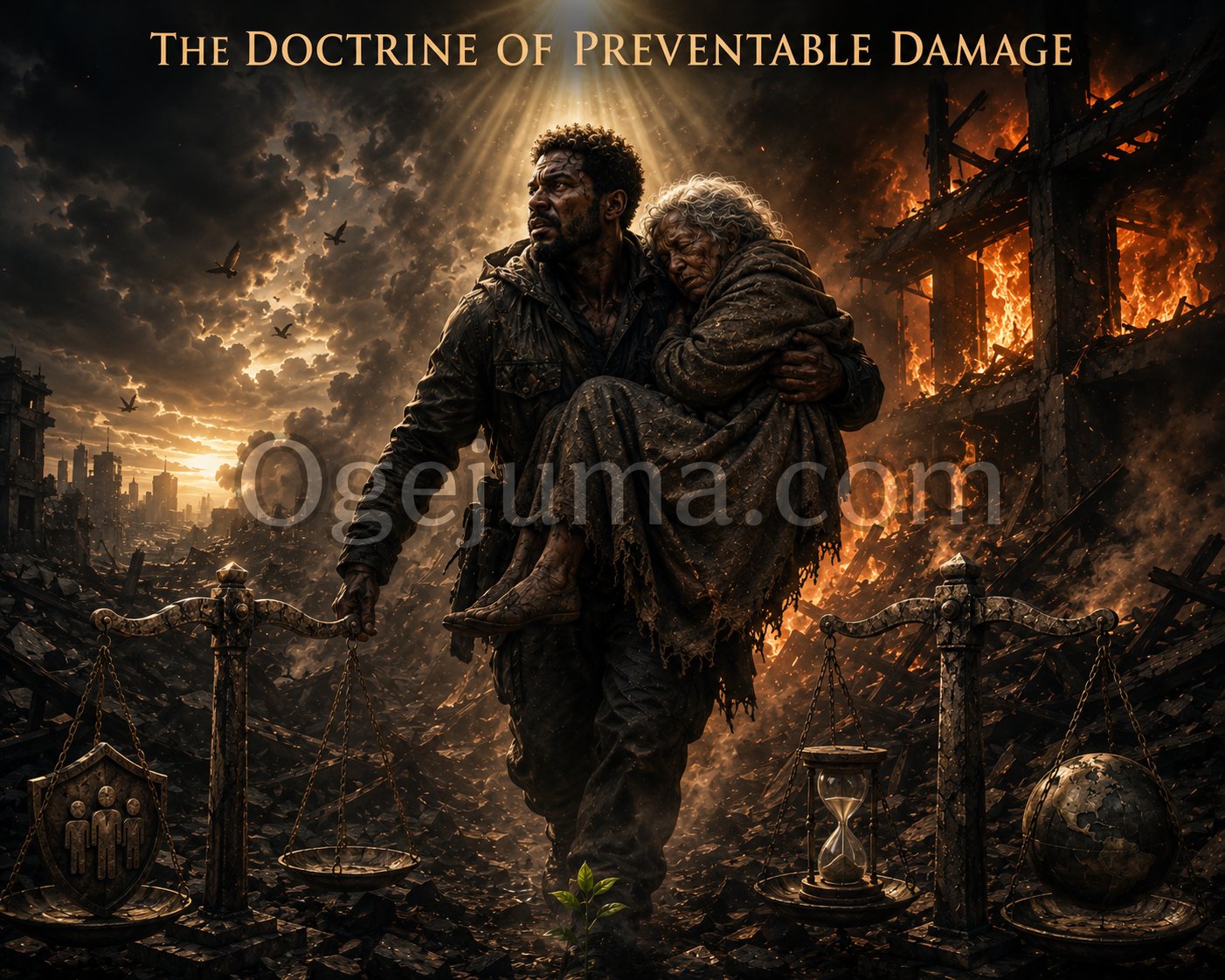
This shift matters because music does not only entertain. It trains. And once a cultural system repeatedly trains people in harmful directions, the Doctrine of Preventable Damage becomes relevant. If damage can be seen, understood, and reduced but is still ignored, then the harm is no longer accidental. It becomes preventable damage.
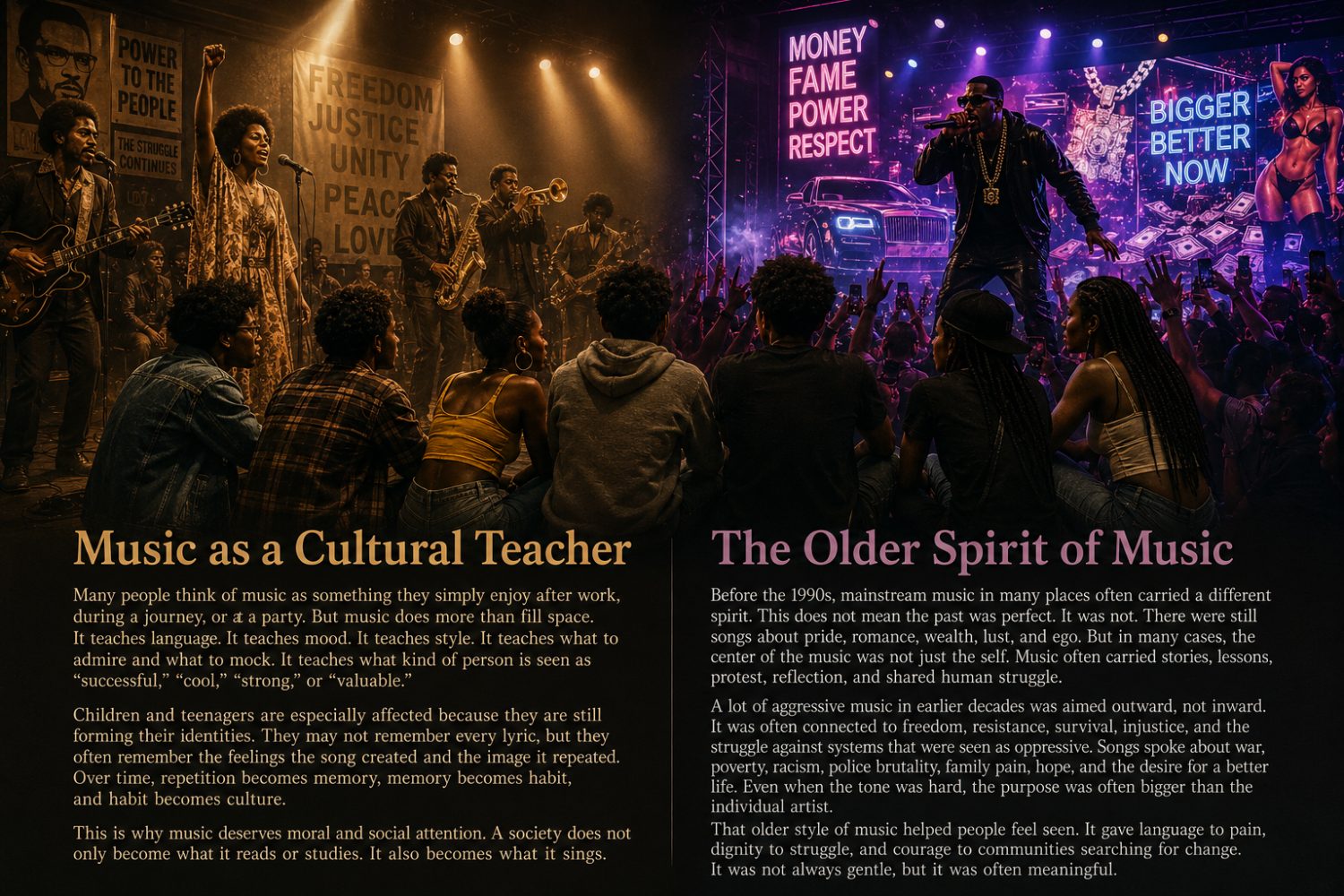
Music as a Cultural Teacher
Many people think of music as something they simply enjoy after work, during a journey, or at a party. But music does more than fill space. It teaches language. It teaches mood. It teaches style. It teaches what to admire and what to mock. It teaches what kind of person is seen as “successful,” “cool,” “strong,” or “valuable.”
Children and teenagers are especially affected because they are still forming their identities. They may not remember every lyric, but they often remember the feelings the song created and the image it repeated. Over time, repetition becomes memory, memory becomes habit, and habit becomes culture.
This is why music deserves moral and social attention. A society does not only become what it reads or studies. It also becomes what it sings.
The Older Spirit of Music
Before the 1990s, mainstream music in many places often carried a different spirit. This does not mean the past was perfect. It was not. There were still songs about pride, romance, wealth, lust, and ego. But in many cases, the center of the music was not just the self. Music often carried stories, lessons, protest, reflection, and shared human struggle.
A lot of aggressive music in earlier decades was aimed outward, not inward. It was often connected to freedom, resistance, survival, injustice, and the struggle against systems that were seen as oppressive. Songs spoke about war, poverty, racism, police brutality, family pain, hope, and the desire for a better life. Even when the tone was hard, the purpose was often bigger than the individual artist.
That older style of music helped people feel seen. It gave language to pain, dignity to struggle, and courage to communities searching for change. It was not always gentle, but it was often meaningful.
The New Center: Self-Exaltation
A major change in modern popular music is the growing focus on self-exaltation. This is not just confidence. Confidence can be healthy. Self-exaltation is different. It is the constant presentation of the self as the main object of admiration.
Today, many songs repeat messages about wealth, power, influence, luxury, sexual conquest, social status, and personal dominance. The artist is no longer just telling a story or expressing a feeling. The artist is often announcing superiority.
The lyrics may say, in different forms:
I am richer. I am tougher. I am more desired. I am above others. I have more connection. I have more power. I am untouchable.
This creates a culture where worth is measured by display. The person with the biggest chain, the loudest car, the most women, the strongest gang image, or the most expensive lifestyle is often presented as the winner.
That message is not small. It is repeated millions of times. And what is repeated eventually becomes normal.
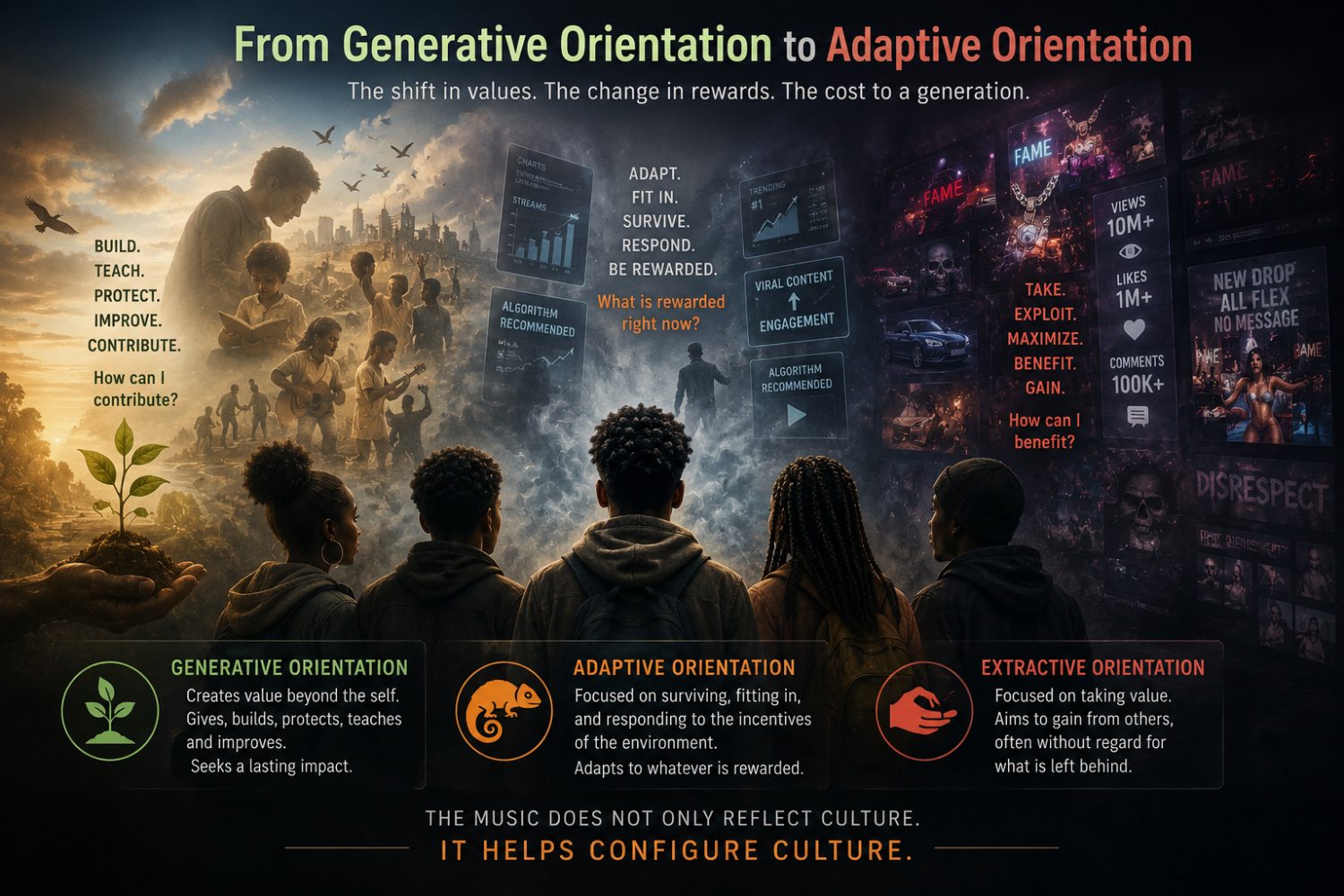
From Generative Orientation to Adaptive Orientation
The Contentment Orientation Model gives us a useful way to understand this shift. Generative Orientation is the part of human behaviour that seeks to create value beyond the self. It gives, builds, protects, teaches, and improves. It is the orientation that asks, “How can I contribute?”
Extractive Orientation is more interested in taking value. It may still create, but the aim is to gain from others, often without equal concern for what is left behind. It asks, “How can I benefit?”

Adaptive Orientation is different from both. It is focused on surviving, fitting in, and responding to the incentives of the environment. It adapts to whatever is rewarded at the moment. It is not always evil, but it can become dangerous when the system itself is unhealthy.

A large part of the modern music industry seems increasingly trapped in this adaptive mode. Artists learn quickly what gets attention. They learn what gets streams. They learn what gets reposted. They learn what shocks, what sells, what provokes, and what trends. Then the music is shaped around those rewards.
This means the music industry does not only reflect culture. It helps configure culture.
The Money Gospel Effect
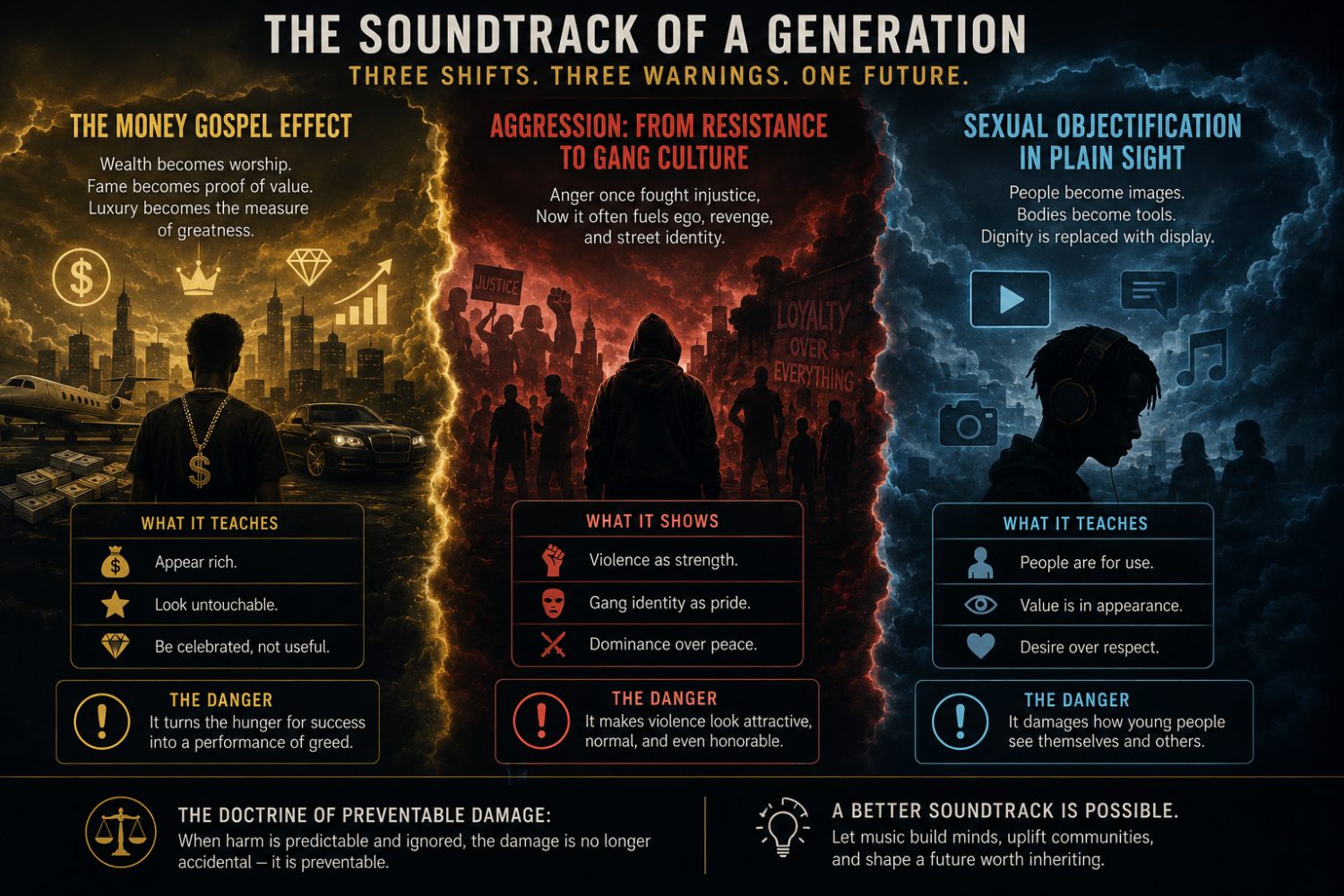
One of the strongest signs of this change is what can be called the money gospel effect. In this system, money is not simply a tool for living. It becomes a spiritual message. Success is preached as visible wealth. Fame is preached as proof of value. Luxury becomes evidence of greatness.
The song no longer asks whether the person is wise, useful, disciplined, or good. The song asks whether the person looks rich, sounds powerful, and appears untouchable.
This creates a false hierarchy of human worth. A person can contribute deeply to society and still be ignored. Another person can do very little of lasting value and still be celebrated because of wealth display, connection, or shock value.
The money gospel effect is powerful because it turns hunger for success into a performance of greed. It teaches young people that becoming admired matters more than becoming useful.
Aggression: From Resistance to Gang Culture
Another major shift is in the way aggression is expressed.
In earlier eras, aggressive music often carried the energy of resistance. The anger was aimed at injustice, exclusion, oppression, corruption, or social neglect. It gave voice to people who felt silenced.
In much of today’s music, aggression often turns inward toward ego competition, gang identity, revenge, disrespect, and domination. Violence is no longer only symbolic. It is frequently linked to street life, criminal identity, territorial loyalty, and the glamorization of dangerous behaviour.
This matters because music does not just describe violence. In some cases, it makes violence look attractive, brave, or normal. When that happens repeatedly, especially in music consumed by children and teenagers, the message is not harmless.
The problem is not that music can never speak about pain or conflict. The problem is that conflict is often made stylish, and destruction is often packaged as identity.

Sexual Objectification in Plain Sight
Sexuality has always existed in music. That is not new. What is new is the scale, frequency, and commercial normalisation of sexual objectification.
In many current songs and videos, human beings are reduced to body parts, temptation, conquest, pleasure, and visual consumption. The person is no longer treated as a full human being with dignity, mind, responsibility, and spirit. Instead, the person becomes a product for desire.
This is especially dangerous because many young listeners are still learning what relationships mean. If the first lessons they receive are built around display, conquest, manipulation, and physical use, then the result can be a damaged understanding of love and respect.
Again, this is where the Doctrine of Preventable Damage becomes important. When a system repeatedly teaches harmful ideas and society pretends not to notice, the damage becomes easier to prevent and harder to excuse.
More Noise, Less Meaning
There is another change that is easy to hear but hard to name. Many older songs had greater semantic density. That means they carried more meaning. They told stories. They asked questions. They used symbols. They carried lessons.
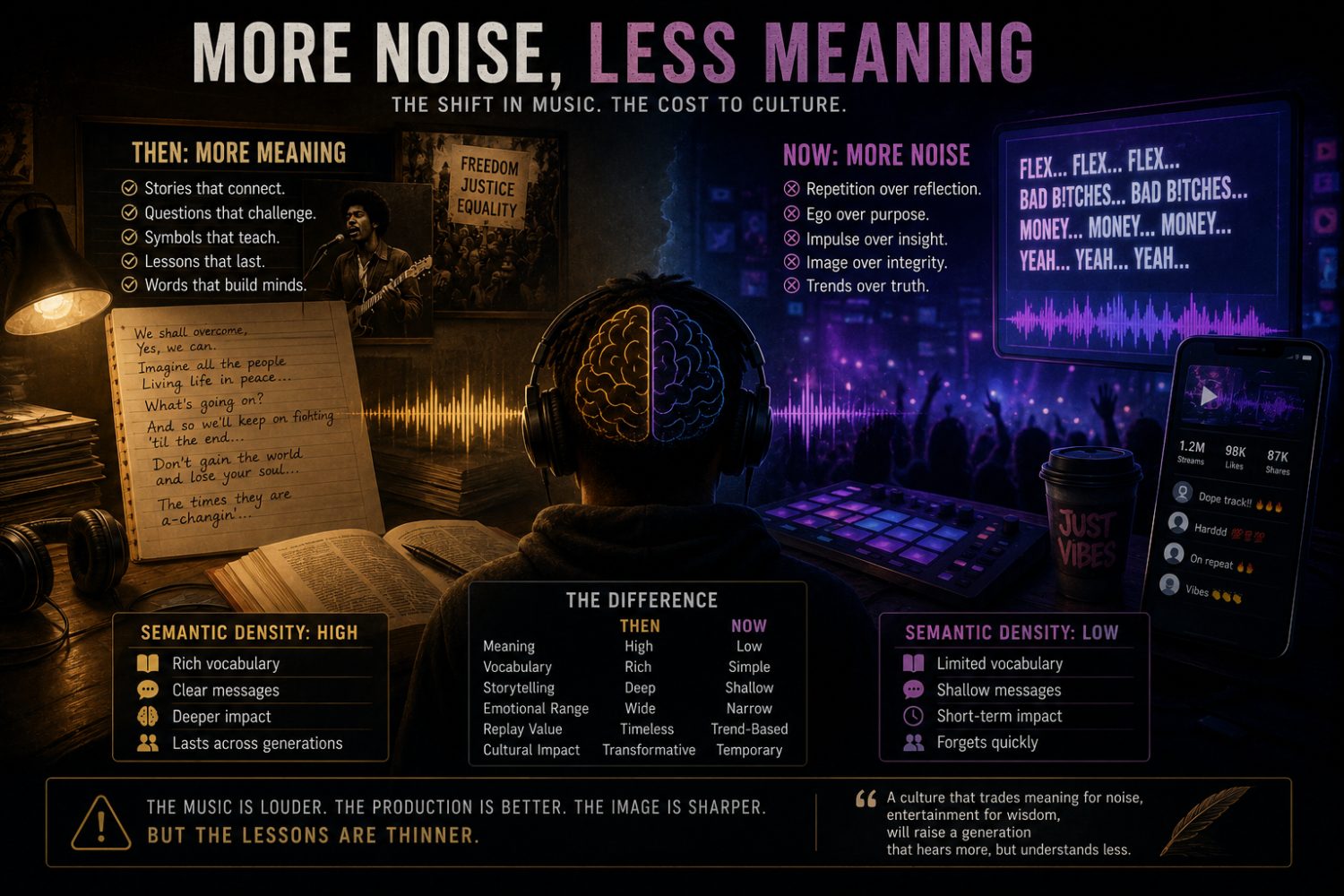
Many modern songs are sonically powerful, but semantically light. They may have a strong beat, a catchy hook, a memorable ad-lib, and a huge online presence, yet communicate very little beyond repetition, ego, or impulse.
This does not mean all modern music is empty. It means that much of the industry now rewards sound over substance.
The music is louder. The production is better. The image is sharper. But the lessons are thinner.
That is a serious cultural problem.
Why This Matters for Children and Youths
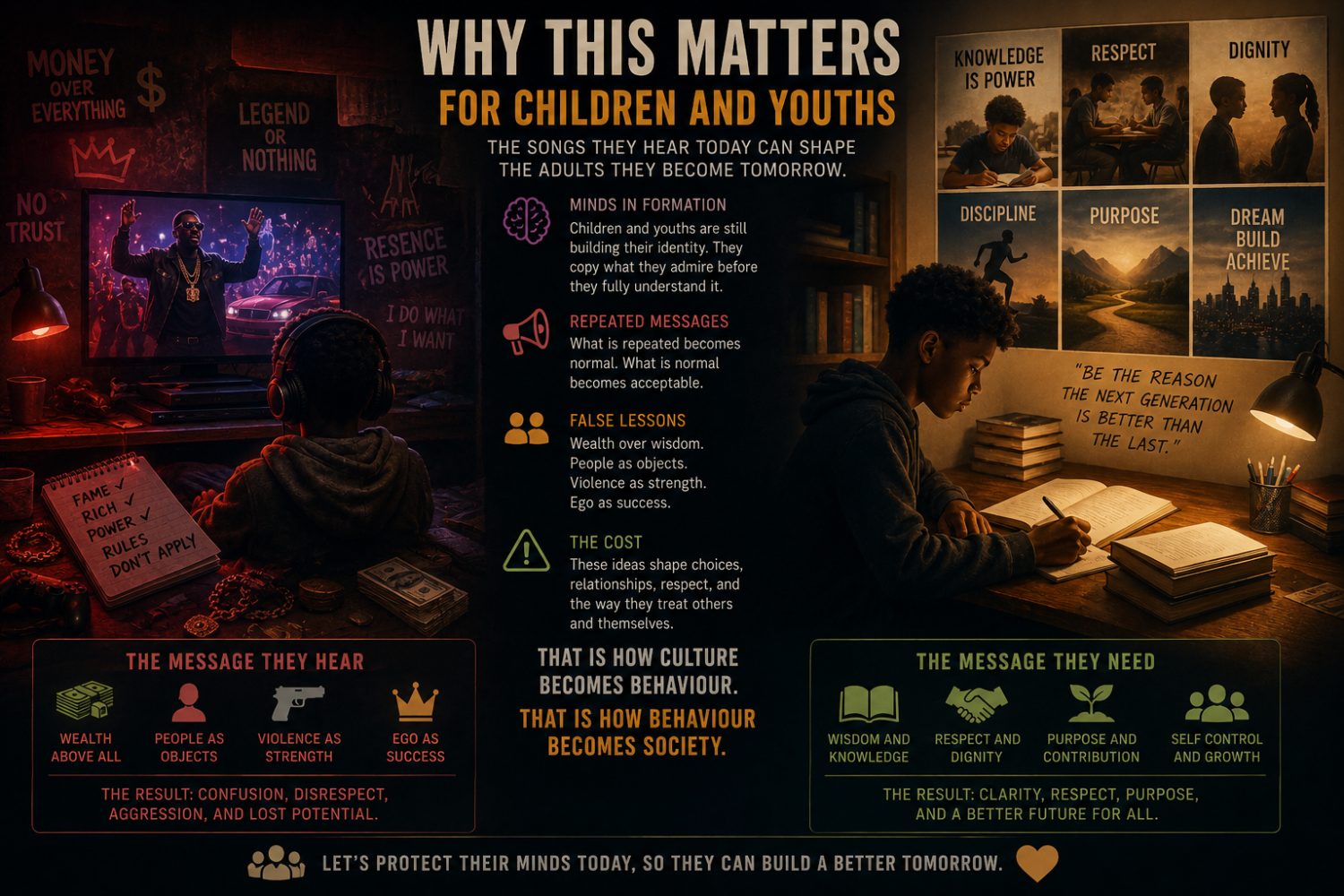
The music industry may appear harmless because it does not attack people with weapons. But culture does not have to look violent to produce violence. It only has to keep shaping minds in the wrong direction long enough.
Children and youths are especially vulnerable because they are still learning identity. They often copy what they admire before they fully understand it. If the repeated message of popular music is that wealth matters more than wisdom, that women or men can be treated as objects, that violence is strength, and that ego is success, then the next generation may carry those ideas into daily life.
That is how culture becomes behaviour. That is how behaviour becomes society.
The Doctrine of Preventable Damage and Cultural Harm
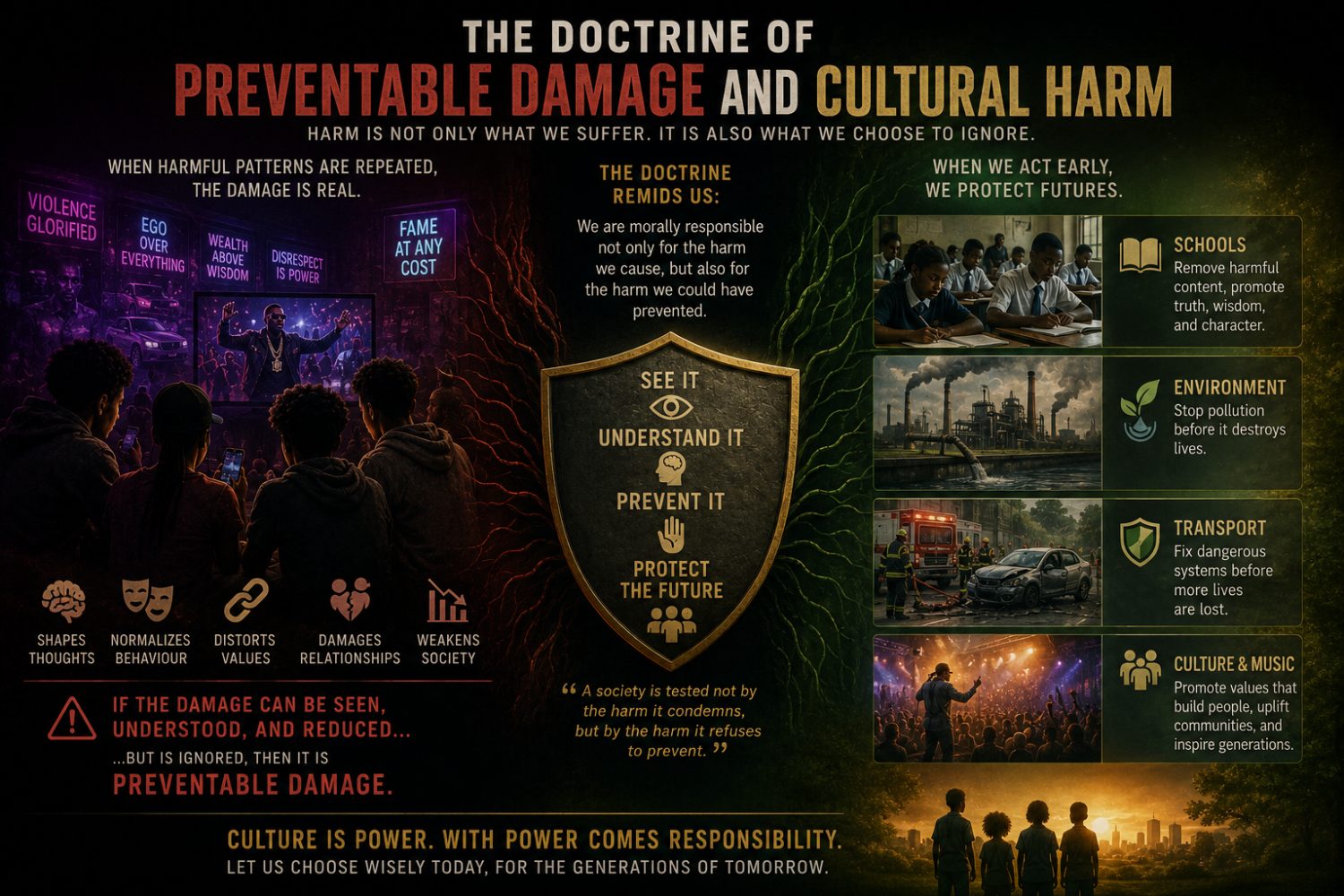
Your Doctrine of Preventable Damage gives the article its strongest moral foundation. The doctrine reminds us that harm should not only be measured after disaster. It should also be judged by the seriousness of our effort to prevent it once the pattern becomes visible.
If a school system was teaching harmful content every day, people would call for reform. If a factory was releasing poison into water, people would call for action. If a transport system was creating repeated crashes, people would call for investigation.
Culture should not receive a free pass simply because it is entertaining.
If music consistently promotes damaging values, then the damage is not imaginary. It is cultural, psychological, and behavioural. And if that damage can be reduced but is ignored because the industry profits from it, then the society is participating in preventable damage.
Looking Deep
This article is not saying music should become boring, cold, or overly controlled. It is not a call for censorship, and it is not a call to pretend that all art must be educational in a schoolroom sense.
Music should remain creative. It should remain emotional. It should remain free.
But freedom without responsibility becomes decay. Creativity without direction becomes noise. Influence without moral thought becomes harm.
A good society should not ask music to stop being art. It should ask music to become worthy of its power.
What Better Music Can Do
Music can still be modern without becoming empty. It can still be creative without becoming destructive. It can still speak about pain without glorifying damage.
Music can praise courage without praising cruelty. Music can celebrate success without worshipping greed. Music can speak about love without reducing people to bodies. Music can address struggle without turning crime into fashion. Music can sound exciting without losing wisdom.
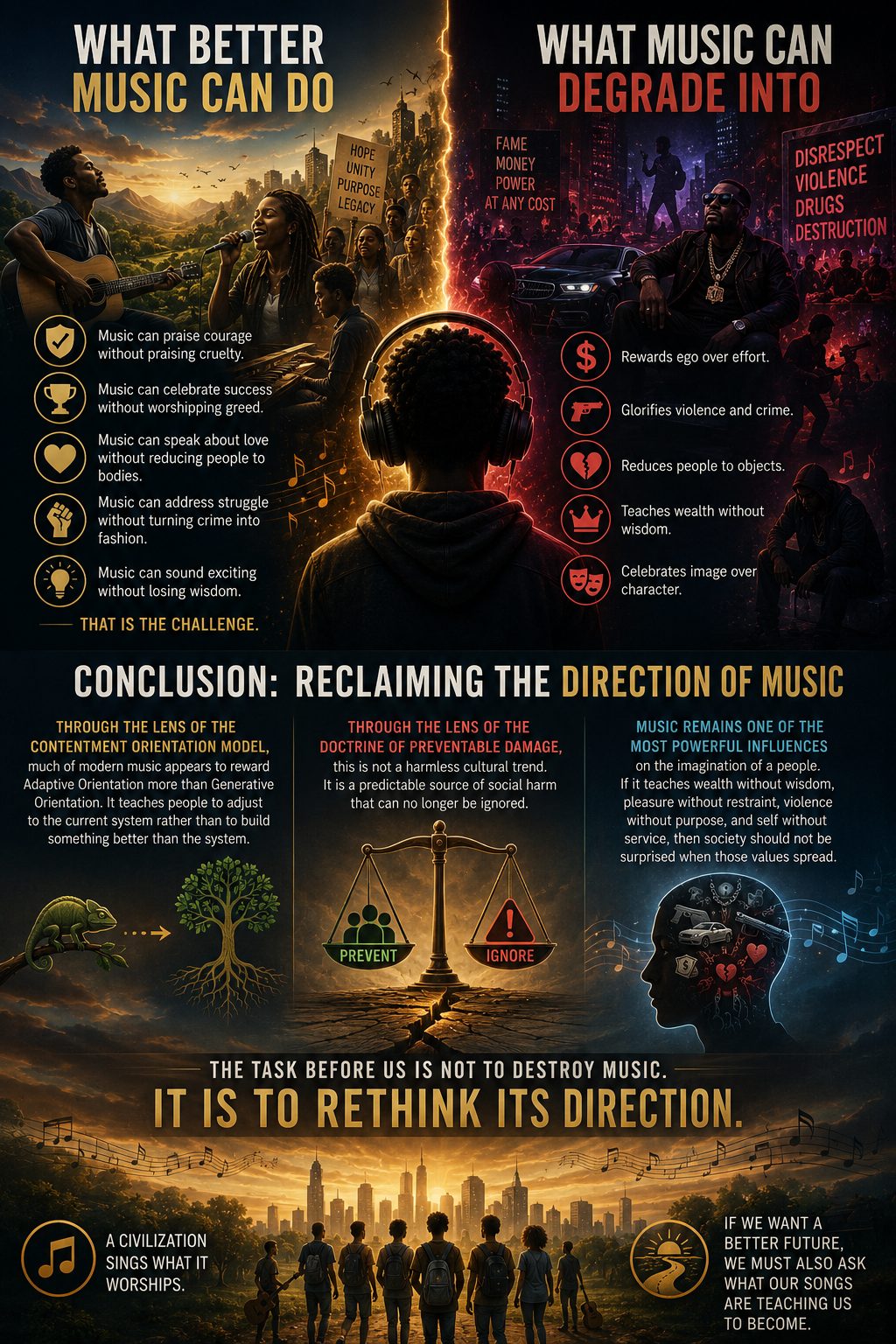
That is the challenge.
Conclusion: Reclaiming the Direction of Music
The real question is not whether music has changed. It has. The real question is whether the change is helping society become healthier or more damaged.
Through the lens of the Contentment Orientation Model, much of modern music appears to reward Adaptive Orientation more than Generative Orientation. It teaches people to adjust to the current system rather than to build something better than the system. Through the lens of the Doctrine of Preventable Damage, this is not a harmless cultural trend. It is a predictable source of social harm that can no longer be ignored.
Music remains one of the most powerful influences on the imagination of a people. If it teaches wealth without wisdom, pleasure without restraint, violence without purpose, and self without service, then society should not be surprised when those values spread.
The task before us is not to destroy music. It is to rethink its direction.
A civilization sings what it worships. If we want a better future, we must also ask what our songs are teaching us to become.
References
Contentment Orientation Model (COM): https://ogejuma.com/the-contentment-orientation-model-com
Doctrine of Preventable Damage: https://ogejuma.com/doctrine-of-preventable-damage
Related Ogejuma framework page: https://ogejuma.com/